
Looking for Mr. Ames

Working as a police officer in the early 1970’s in upstate New York, I can recall being dispatched in the middle of the night to a remote dirt road to look for an elderly woman reported wandering aimlessly in her nightclothes.  Having been sent there previously, I knew that it would be Mrs. Ames, and that she was, once again, out searching for her husband and her son … both of whom who had passed away years before. 

Given our scant knowledge of dementia at that time, it was our understanding that Mrs. Ames was “senile.”  That being so, I did what we always did … I picked her up, took her back to her home, and sought a family member to take her into their care.

Over the many years since my paltry efforts to help a disoriented woman to safety, I have come to understand that Mrs. Ames suffered from dementia … an umbrella term encompassing a broad range of brain conditions that cause a progressive decline in a person’s ability to think and remember.  What’s more, the loss of these abilities makes it increasingly difficult for people to function or care for themselves.

Today, dementia in its many forms is far better understood and, in the law enforcement community, comprehensive training is readily available for police agencies nationwide.  The International Association of Chiefs of Police, for example, provides model policies   and training curricula to prepare officers for encounters with citizens suffering from dementia, as well as checklists to follow in mounting a search for someone who may have wandered away and gone missing.

My wife, Bonnie, and I, are fortunate to reside in a community where a number of resources are available to those suffering from dementia and to their caregivers.  Just a few of the very supportive entities upon which one can call in our area include Dementia Friendly Fort Worth (dffw.org), the James L. West Center for Dementia Care (jameslwest.org), and Musical Memory Singers (musicalmemorysingers.org).  

Given the fact that one in three seniors dies with Alzheimer’s or another form of dementia, having access to support and guidance of this nature is invaluable.

As I look back some fifty years to that rural road and my interaction with Mrs. Ames (not her real name), several thoughts come to mind.  First, I hope that I treated her with dignity and compassion as I picked her up, took her back to her home, and reached out to family to care for her.  Second, I am comforted in the knowledge that first responders, today, are far better prepared than I was, to identify and assist individuals suffering with dementia.

Finally, I have boundless gratitude for the efforts of those working to find a cure for Alzheimer’s, as well as for the many groups and volunteers who provide support and guidance to individuals struggling with that awful disease, and to their caregivers.

Gail Weatherill has been a practicing RN for more than 40 years, and is a board-certified Alzheimer’s Educator.   Her poignant words are an inspiration to anyone touched by this awful disease:

Dementia care … it’s not rocket science, it’s heart science.

Telling The Good Guys From The Bad

As a youngster, I would sit in front of our 12” black and white Zenith television watching the Lone Ranger perform heroic acts of derring-do to save another small town or damsel in distress in the West.  At the end of each of episode, I can recall various townspeople asking one another: “Who was that masked man?”

Today, news coverage of illegal aliens being taken into custody and carted away around the United States has me asking a similar question: “Who are those people in the masks?”  I assume they are Immigration and Customs Enforcement (ICE) officers, but since they wear no discernible uniform and cover their faces it is hard to say for certain.  Police officers generally wear blue uniforms … Border Patrol wear green … even the FBI will often don raid jackets when taking enforcement action … but who are these guys?

I doubt I am alone in wondering how I might react if accosted by a masked individual attired in randomly-assembled civilian clothes … should I obey their orders?  My instincts tell me to resist … should I?  If I were to comply, would I be putting myself at risk?  And more to the point, how, in this country, have societal norms disintegrated to the point where law-abiding citizens, like me, should have to weigh those sorts of questions?

As a retired police officer, I know that the important work being performed by ICE is complicated, difficult and dangerous, and I am steadfast in acknowledging the importance of officer safety.  In carrying out those duties, though, there is no rational reason for ICE officers to wear masks and, in fact, it could be argued that doing so makes their jobs even more hazardous.  In my view, when law enforcement officers conceal their identify while carrying out their lawful duties citizens and police, alike, are on perilous terrain.

Mike German, a former FBI agent and a fellow at the Brennan Center’s Liberty and National Security Program, puts it this way:

Masking symbolizes the drift of law enforcement away from democratic controls.  When it’s hard to tell who a masked individual is working for, it’s hard to accept that it is a legitimate use of authority.  

Order In The Court?

Raising a family in the 60’s and 70’s, I often found myself seeking out part time employment  to help make ends meet.  One job that was especially appealing was that of Little League umpire, for it allowed me to take part in a sport I loved, to work with youngsters, and to pull down the princely sum of $8.00 per game.

As a police officer, though, I had to clear the administrative hurdle of requesting approval from my employer before I could take my stance behind home plate.  The purpose, of course, was to make certain there would be no conflict between my calling balls and strikes for 10-year olds, and unbiased enforcement of the law in my real job.

Many years later, I was tasked with making the travel and associated arrangements for a senior Federal law enforcement official who had, graciously, accepted our invitation to speak at a conference we were organizing.  Pleased though we were that he would join us, I was taken aback by the eleven page questionnaire I had to complete in order for him to attend.  Eleven pages!

Among the queries were … will he be receiving a meal? … who is providing the meal? … what is the value of the meal? … will he be receiving an award? … what is the value? … what is the cost of travel and lodging? … who is paying for the travel and lodging?  While tedious, the purpose of this inquiry was to assure that nothing of value might be offered or accepted that could give rise to even the slightest appearance that this government official might be beholden to some person or institution.

Reflecting back upon the hoops I had to jump through as a young police officer seeking to officiate baseball games and, later, as organizer for a law enforcement gathering, recent events make me wonder whether certain government officials in positions of public trust cleave to an equally rigorous ethical standard.  I am talking, of course, about the United States Supreme Court, and recent reports that this august body might not be as, well, honorable as it claims to be.

As this matter unfolded, questions were raised, initially, about possible ethical missteps by only one or two members.  Gradually, though, more issues surfaced, with each begging further elaboration.  For example, the sale or purchase of property … acceptance of trips and vacations … sources of spousal income … failing to recuse after accepting gifts from individuals with matters before the court … and overall lack of transparency regarding financial disclosures.

The crux of the matter here, of course, is simple: though we expect every decision handed down by the “highest court in the land” to be based entirely on thoughtful and objective consideration of the facts, there will always remain a modicum of doubt about the motivation of any justice who may have benefitted from the largesse of an individual with an interest in the case at hand.

In 1951, Judge Irving Kaufman presided over the espionage trial of Julius and Ethel Rosenberg.  This widely respected federal magistrate spoke, this way, of the imperative connection of ethics to our judicial system:

The supreme court’s only armor is the cloak of public trust; its sole ammunition the collective hopes of our society.

More recently (Dallas Morning News, July 7, 2023) retired Texas District Court Judge Jerry Calhoon provided an eloquent, thoughtful and first hand appraisal of the issues at the very heart of this current debacle:

When I became judge of the 349th District Court of our state, I received an invitation to an annual fish camp gathering of attorneys for a weekend at the lake.  Although it came from a former classmate, I politely declined, reasoning that having never been invited before it was only my ascension to the bench that drew the invitation.  I wished to avoid any appearance of impropriety that the judicial ethics of our state requires.

Justices of the Supreme Court accepting hundreds of thousands of dollars worth of benefits from donors having interest in the workings of the court boggles my mind.  Then to read that some in the media think the only problem is their failure to report as the law requires makes me wonder what universe I live in.

Acceptance of these benefits is the problem.  Does anyone believe for a minute that these gifts were bestowed because of the scintillating wit or pleasing personalities their presence would bring to the gathering of the donor’s acquaintances?

I once was proud to be a member of the bar of the U.S. Supreme Court.  Now I feel as if my certificate of admittance has been denigrated by these justices.

Using the Hebrew word signifying truth or agreement, I can only add … Amen.

From Muskets to Madness

My fifth great-grandfather, Valentine Ephraim Wheeler, was born February 14, 1725, in Rehoboth, Massachusetts.  On April 19, 1775, he fought the British at Lexington in the first battle of the Revolutionary War, going on to serve as a Captain in the New York Regiment of Militia.  Valentine Wheeler, an American patriot, died October 12, 1791, and is buried in the Valley View Cemetery, Dover Plains, New York.

On December 15, 1791, two months after Valentine died, the Second Amendment to the United States Constitution was ratified, along with nine other articles of the Bill of Rights.  And though we can’t know for certain, I have a feeling that given the time in which he lived and the part he played in the War of Independence, he would have looked kindly upon legislation ensuring a well-regulated militia and his right to keep and bear arms.

For the purpose of this discussion, though, an understanding of the times in which the 2nd Amendment was crafted is important, especially since “arms” from that era bear no resemblance whatsoever to the vast array of powerful weaponry available today.  Simply put, the guns known to those deliberating this important amendment consisted of the various muzzle loading rifles, muskets and flintlock pistols used in combat against the British and, needless to say, none among those early legislators could have envisioned the plethora of armament now available for both military and civilian use.

Assuming, for a moment, that Valentine Wheeler was skilled in the  use of a muzzle loading rifle, the multi-step process for firing required that he pour measured powder down the barrel, place a patch and ball on the muzzle, push the ball into the barrel and then using a ramrod, force the ball all the way down.  Following these steps in the heat of battle meant that, at best, he would be able to fire only three rounds per minute, each with a muzzle velocity of 1,000 feet per second and a maximum effective range of 50 meters.

In contrast, the typical modern-day AR-15 holds 30 bullets in a standard magazine, and can fire 45 rounds per minute with a muzzle velocity of 3,260 feet per second and a maximum effective range of 550 meters.  As we know, arms of this sort have become today’s “weapon of choice” for mass murderers, especially since they can be equipped with extended magazines and further modified to fire in fully automatic mode. 

Clearly, the 2nd Amendment was created in and for a very different period of time, but it is not the only antiquated portion of the Bill of Rights.  The 3rd Amendment, for example, assures us that soldiers may not be quartered in private homes without the owner’s consent.  That is good to know, but while I celebrate the fact that an army platoon cannot bivouac in my living room, I find myself conducting a risk assessment every time I venture out to the mall, a musical presentation, or even a 4th of July parade.

It is important to pause here and emphasize that I am not among the absolutist anti-gun crowd … much to the contrary.  I am a retired police officer who qualified with a range of sidearms and long guns over the course of my career … my grandfather was a gunsmith, a prison armorer, and a Life Member of the NRA … and my mother was captain of her high school rifle team.  In other words, I grew up around firearms and am both comfortable and competent in their use.

My personal familiarity with guns aside, there is no rational reason for assault weapons to be in the hands of civilians.  Those sorts of arms, which are designed and intended for the battlefield, pose an extraordinary public safety risk which, as evidence has repeatedly shown, make it easier for shooters to kill more people more quickly.

I sometimes wonder what it would be like for one of our ancestors to return, briefly, to our present-day world for a visit. What, for example, would Valentine Wheeler – who fought for “Life, Liberty and the Pursuit of Happiness” – have to say of our preposterous failure, as a people, to ban a device that has contributed to so much carnage and misery.

Amanda Gorman, the 2017 National Youth Poet Laureate, captures the essence of this argument perfectly:

It takes a monster to kill children, but to watch monsters kill children again and again and do nothing isn’t just insanity – it’s inhumanity.

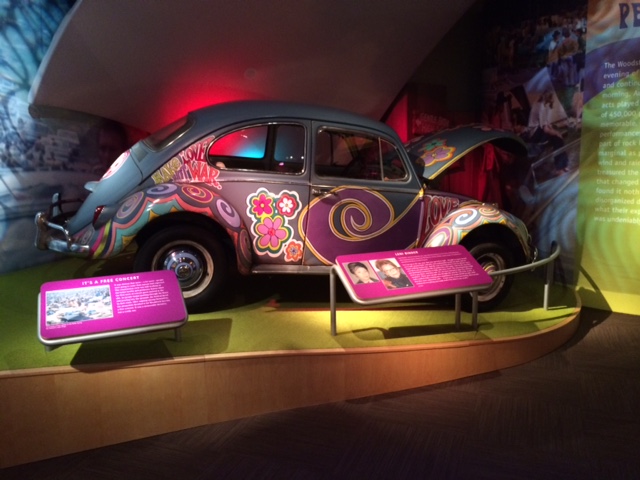
Woodstock Redux

Does the name Sri Swami Satchidananda ring a bell?  

On August 15, 1969, he was the Yogi who opened the Woodstock Festival with remarks about the “sacred art of music,” after which he led the assembled masses in several chants.  And while many factors combined to keep this event relatively calm, there are those who believe the Yogi’s words … “Hari OM” and “Rama” … were symbolic of the peaceful nature of this iconic gathering.

With the 50th Anniversary of Woodstock just over the horizon, there is another well-known Yogi who comes to mind … Yogi Berra.  And though he has been gone since 2015, one of his immortal malapropisms seems an especially accurate capture of the chaotic planning for this event: “It’s like deja vu all over again.”  

Thinking back to the woefully inept preparations for the original Woodstock, a number of memorable fits and starts come to mind … several communities rejected the festival before Max Yasgur stepped in at the very last minute … food and water supplies ran out almost immediately … medical care was inadequate … police were vastly outnumbered … and traffic control was non-existent.  

Considering the near-catastrophe in 1969, one might have expected a cooperative and competent planning effort this time around.  Recent reports, though, indicate otherwise … in one press release, the Bethel Woods Center for the Arts emphasized that their planned anniversary is not affiliated with the organizers of the 1969 Festival, going on to underscore that they are not associated in any way with Michael Lang (the key promoter of the 1969 festival).

Meanwhile, Michael Lang has announced that he has plans for the anniversary as well, though details of who will be performing, and when and where the show will be held are not yet available.  Lang says further information will be coming soon.

In other words … when it comes to planning Woodstock Festivals, it is business as usual.

Although I have been retired from policing for a number of years, I always celebrated my good fortune at having been assigned as a young officer to work at Woodstock.  I learned much from that experience, but there is no denying that those days and nights in August, 1969, were long and busy.  All of us … cops and hippies alike … were wet, tired, and hungry, but when it was over, we knew we had been part of something remarkable.

My wife, Bonnie, and I will be heading to New York for the 50th Anniversary, but this trip will be different in a number of ways.  First and foremost, I will not be working, so the  miles-long traffic jams on Route 17-B (now known as “The Woodstock Way”) will be somebody else’s problem.  Instead, during this visit we will be engaging in some of the activities I witnessed but could not participate in last time.

No, we will not be sleeping in pup tents, using illegal drugs, or eating brown rice from a hand-thrown pottery jar.  Instead, as we set out for Bethel, New York, this summer, we will be guided by the words of Don McLean in his 70’s anthem American Pie: “We all got up to dance.  Oh, but we never got the chance!”

In 1969, we did not have the chance … but this time we will ……….

3387-700x0

The Guys at Breakfast

In Fort Worth, Texas, the “go to” place for good food and great service is the West Side Cafe.  If you stop there on a Tuesday morning, don’t be surprised at the mob of guys sitting in the back room talking, laughing and enjoying breakfast together.  The restaurant knows to expect this crew and, though doctor’s appointments and other alibis can cause the numbers to fluctuate, a solid ten to twenty guys make it a point to show up every week.

I am proud to count myself a member of this merry band.  All of us are neighbors at Overture Ridgmar, a 55+ Active Retirement Community where, on Tuesday mornings, we form up and car pool to our weekly gathering.  

A casual diner walking into the West Side Cafe and seeing this crew, might be inclined to write us off as simply a rag tag collection of “old guys” with grey hair (or, in some cases, no hair).  But that would be a mistake.  Having had the good fortune to spend time with these fellows and get to know a little bit about them, I can testify to the fact that the experiences, depth of knowledge and record of accomplishments around that table are, in a word, remarkable.

Many of my breakfast colleagues have founded and managed businesses, others have performed design work in aeronautics, there are medical professionals, men with legal backgrounds, advanced teaching credentials, two preachers, a musician, and a banker.  A common theme among most of the fellows around the table, though, is military service.  You would never know it, however, from listening to the Tuesday conversations … nobody aggrandizes their time in the armed forces.  You have to ask … and ask again … to learn what they have done in service to our country.

As a police officer, I learned early in my career that, from time to time, people would decide to resist arrest.  Occasionally, somebody would raise their fists and declare loudly: “I’m going to kick your *** … I’m not going to jail!”  Caution was always important, of course, but in most cases I found those bold declarations to be little more than bombast.  On the other hand, the people who always impressed me were those who quietly assumed a bladed and balanced stance, kept their hands free, made direct eye contact and didn’t say a word.  It was clear that those folks knew how to handle a physical confrontation … they didn’t have to broadcast how tough they believed themselves to be.

In my experience, what I just described is much the same with military veterans.  Maybe it is just me, but when someone repeatedly (and unsolicited) tells everyone around him of the heroic things he did while in the military, I tend to be suspicious of their declared credentials.  It is the quiet one, though … the one who has to be prodded to talk about his experiences … he is the one that usually has the most impressive story.  

For example, among the men at Tuesday breakfast are a number of retired Viet Nam veterans including a KC-135 pilot, a member of a B-52 crew, a Helicopter pilot, a Swift Boat crewman, a West Point graduate who commanded an artillery battalion, and a number of enlisted “ground pounders.”  Our group also includes a veteran of the Korean conflict who, at age 19, parachuted into North Korea.  None of the men around our table talk about their military experiences unless prompted, but each is rightly proud of what he has done in service to our country.

When someone walks into the West Side Cafe on a Tuesday morning, he may find himself seated near a large group of older guys who seem to be talking about things like the Texas Rangers current losing streak or a new medication for aches and pains.  In truth, though, there is a lot more going on at that table, and I have been privileged to sit, listen and learn from some really remarkable men.

Having sold our home and moved to Overture Ridgmar less than two years ago, my wife and I remind ourselves, on a daily basis, how much we enjoy our new living arrangement.  There is much to celebrate in our new digs but, for me, one of the most rewarding benefits of our move has been the opportunity to meet and interact with this remarkable group of guys with whom I go to breakfast each Tuesday.

Frequently Wrong: Never in Doubt

For anyone thinking about quitting their day job to start earning big bucks as an author, think again.  James Patterson, Stephen King, Bob Woodward and other literary luminaries are, of course, the exception, but when you are writing and self-publishing brief memoirs, well, it is a good idea to make sure the mortgage payment does not rely on this months’ book royalties.

Knowing this, when I sit down to write I do so for entirely different reasons.  The fact is, I enjoy putting ideas down on paper and, hopefully, providing a worthwhile experience for the reader along the way.  And if, on occasion, the final draft turns out well, I give full credit to two important people … Miss Goodman, my High School English teacher … and Sergeant Herbie Stahn, who was merciless in reviewing reports that I wrote … and rewrote … as a young Trooper with the New York State Police.

I also enjoy writing and self-publishing because it puts me in touch with people with whom I enjoy interacting.  In the area where I reside, there is a community-oriented chain of stores named Half Price Books.  Their shops are always fun to visit, and they even provide “book signing” opportunities for local authors.  I have taken advantage of a number of these events and, though books sales are always modest, the conversations with customers and passers by always make for a delightful experience.

Most of the time.

At one recent gathering, a number of folks stopped to talk about my book “Dear HIppie … We Met at Woodstock,” with many sharing their recollections of what was going on in their lives at that time and place in history.  There was a lot of laughter and much discussion about that iconic festival, and many theories about why people are still talking about it today. 

Around the middle of the afternoon, a woman walking past my table noticed the book and its’ title.  She stopped, looked at the cover and said: “Woodstock … I saw a move about that once.”  The conversation that followed went, essentially, like this:

Me:  “Yes, I was there, and that’s why I wrote the book.”

Her: “The movie showed that it was wild and out of control, with people doing all kinds of drugs.”

Me: “I worked there as a police officer and, yes, there was a lot of marijuana being smoked.  But the fact is the youngsters were extremely cooperative and kind.”

Her: “The movie said that people were drunk, stoned and having sex all over the place.”

Me: “Well, like I said, I was there and I did not see any of that.”

Her: “Well, maybe you should watch the movie.”

Me: “Um … I was there.”

Her: “Well … okay then!”  

After giving me a look of haughty disdain, the woman turned and stalked away.  As I watched her disappear into the crowd, I was reminded of Earl Landgrebe, a Republican Congressman who, in 1974, registered his adamant opposition to the impeachment of Richard Nixon with these memorable words: “Don’t confuse me with facts.  I’ve got a closed mind.”61CHJRGEDWL._SY445_

There is more to be said on this matter but, for now, I must move on to something far more important.  I have to go in search of a copy of the “Woodstock” movie from 1970 … and once I lay hands on it, I may finally be able to find out what really happened over those magnificent three days in August, 1969, in Bethel, New York.

Woodstock Everlasting

The Woodstock Music and Art Fair was neither the first nor the last of a number of similar gatherings in the late 1960’s and early 1970’s.  In many ways, though, it holds a place of special significance in any discussion of the vast cultural changes so characteristic of that era.  Other concerts … Monterey … Isle of Wight … Altamont … Powder Ridge … contributed to the music and protest scene of that time, but only Woodstock has its own special and enduring brand: Woodstock Nation!

Since the initial publication of “Dear Hippie,” I have been invited to speak about Woodstock before a number of groups.  Across those sessions I met only a few folks who claim to have been in Bethel, but a vast number of others who, though not physically present, have vivid recollections of what they heard or read about those remarkable three days in August of 1969.  What I found especially impressive was that, young and old alike, people were acutely aware of Woodstock, and had a sense of what it seemed to meanIMG_1512 during that vibrant period.

While the conversation about Woodstock has allowed me to resurrect a number of fond memories, it has also shown me how deeply that singular event and that distinct period of time have touched so many people.  Clearly, if there is such a thing as a “Woodstock Nation,” its influence is felt well beyond the corporate boundaries of Bethel, New York, and is not limited solely to those with boots (or sandals) on the ground at the festival itself.  And though elusive, there is something about the texture of those three days that continues to resonate.  Having had the good fortune to be there, I suspect that it springs from the unexpected enormity of the event, and the fact that some half million people, effectively cut off from the rest of the world, persevered through an intuitive spirit of cooperation and good will.  And, yes, there was some music as well.


Some fifty years after the fact, the question remains: why does this event, originally billed as a mere music and art fair, remain so indelibly imprinted on our consciousness?  Theories abound, but Richie Havens, the first performer to take the stage at Woodstock, put it this way:  Though it’s frequently portrayed as this crazy, unbridled festival of rain-soaked, stoned hippies dancing in the mud, Woodstock was obviously much more than that or we wouldn’t still be talking about it in 2009. People of all ages and colors came together in the fields of Max Yasgur’s farm.

Nostalgia has a way of smoothing off the rough edges, so I am not surprised that those incredibly long hours, sodden fields, gridlocked roads and throngs of people seem less overwhelming today than they did in 1969.  Instead, my mind is drawn to more pleasant memories … smiling faces …  acts of kindness … expressions of appreciation … and the sense that we were involved in something bigger than all of us.  It was a very special time and place and, as the saying goes, if we didn’t do foolish things while young, we wouldn’t have anything to smile about when we are older.

For a lot of us, those days three days at Woodstock … well, they make us smile.

Of Jelly Beans, Chimneys and Such

Police officers and other first responders often find themselves working on holidays.  And while this inconvenience is understood to be “part of the job,” there is no denying that being on duty while others are celebrating with families can be difficult.

Cops, though, have a way of lightening the mood.  On Easter, for example, it was a common occurrence for the dispatcher to send a midnight shift officer to an accident where a vehicle had struck an “unknown animal.”  Further details in the radio transmission would typically run something like this: “ … uh, witnesses do not know what sort of animal but … uh, it is big and fuzzy … and, uh, there are numerous jelly beans spread around the scene.”

At Christmas, night patrol officers expected, at some point, to be dispatched to a call along the lines of: “ … report of a suspicious person on the roof … uh, caller describes the suspect as chubby and dressed in red … and, uh, he appears to be trying to climb down the chimney.”

Patrol officers had a way of getting a laugh at the expense of dispatchers as well.  Back in the “old days” when vehicle license information had to be obtained through a radio transmission to dispatch, cops would sometimes reach into their store of “special” license plates that they knew were issued to some recognizable names.

One such scenario involved an officer calling in an apparent abandoned car.  The cop would tell dispatch: “ … there is nobody around, but I found a complete set of men’s clothes on the floor of a phone booth next to the car.”  The dispatcher would then be asked to check the license plate on the vehicle which, naturally, came back to Clark Kent (the mild-mannered newspaper reporter who, when duty called, would turn into Superman).  Coincidentally, one of Clark Kent’s favorite places to change from street clothes to his superhero leotards was in a phone booth!

Another “abandoned car” prank began with a cop telling dispatch: “ … there is nobody near the vehicle, but the inside is filled with hamburger wrappers, french fry containers and soft drink cups …”  When the license plate was checked it came back, naturally, to Ronald McDonald.

The sorts of shenanigans mentioned above would, generally, take place on quiet overnight shifts when things were slow.  And while most officers looked upon these antics as harmless horseplay, there was not always universal agreement across a given shift.  Sometimes, senior officers – who wanted nothing more than radio silence – would make their views known by broadcasting on the car-to-car channel: “Knock it off … we are trying to get some sleep!”

Taking a Knee

Every once in a while, something extraordinary appears on Facebook. Take, for example, the powerful and eloquent post from a New York State Trooper who, ten years ago, was shot while at the scene of a domestic disturbance. In her post, she recounted the details of that awful day, and expressed her gratitude to the three officers who responded to back her up and who, after the shooter was neutralized, worked to save her life.

In this age of hyper-charged debate about what it means for an athlete to take a knee before a game, this Trooper’s post reminded me of a simple but absolute truth: police officers kneel all the time. And when they do, it is not to register their views on some social or political issue. Instead, cops take a knee because that is what the job calls for, and they do it without hesitation.

In the case of the seriously wounded Trooper, this was exactly what happened. Once the scene was stabilized, the three other officers (from two different agencies) who were there, immediately took a knee by her side, cared for her, and remained with her until she was evacuated.

As the recent tragedy in Las Vegas unfolded, pictures of the scene showed numerous police officers taking a knee next to patrol vehicles and, while under fire, scanning their surroundings to determine the location of the shooter.

Police officers responding to the scene of a serious auto accident sometimes find that they are unable to reach a trapped individual in a wrecked car until they take a knee on the pavement. Only then are they able to reach in through the twisted metal to render assistance.

Family disturbances are among the most emotional and dangerous calls for police officers. In the aftermath of those events, though, it is not uncommon for cops to take a knee to comfort a distraught young child watching a parent being led away in handcuffs.

And, far too often, police officers find themselves taking a knee at funerals, wakes and memorial ceremonies as they pay their respects to fallen brothers and sisters who have made the ultimate sacrifice.

Next weekend, the networks will gear up for the usual schedule of athletic events and much attention will be paid to whether athletes knelt or did not kneel during pre-game ceremonies. And though it will go unnoticed, this is one of those times when cops will not take a knee. Instead, with the first stirring notes of the National Anthem, every uniformed police officer in the arena will stand at attention and render a crisp hand salute.

As Americans, we do not rise and show respect for the flag and the National Anthem as a way of aggrandizing ourselves. Instead, we do so to honor, in some small way, those who have paid the ultimate price for our freedom. Police officers, who place themselves in harms way every day on our behalf, understand this better than most.