
Predator Priests in Paradise

For many, thoughts of the South Pacific bring to mind lavish vacations on beautiful islands with miles of white sand beaches.  Given their exotic locale, islands in this region are very popular with diving enthusiasts, and have even become the venue of choice for “destination weddings.”

Sadly, they have also gained a much more sordid reputation for another reason … they are excellent places for the Catholic Church to hide predator priests.

According to a report in the NY Times (9/6/24), island nations in the South Pacific have become a repository for Catholic priests and missionaries accused of having sexually abused children.   In fact, more than 30 of these fallen clergy have taken up residence in Fiji, Kiribati, New Guinea and Samoa and, in at least 13 of those cases, their superiors knew that these men had been accused or convicted of abuse before being transferred to the Pacific.

In one particularly egregious case Julian Fox, the Australian head of the Salesians of Don Bosco in Melbourne, was moved to Fiji when it became known that a former student had accused him of rape.  Being in that island nation kept him out of the reach of Australian authorities, where he stayed for several years before taking an assignment at the Vatican.  Yes … that’s right … he took an assignment at the Vatican.

A decade after the initial accusations, Fox returned to Australia where he was convicted of abusing five children, some of whom he beat and violated with a pool cue according to media reports.

Similarly, Rodger Moloney, leader of a Catholic school dedicated to caring for disabled children in New Zealand, was reported in 1971, to have sexually abused a child.  Shortly thereafter, he took a position at the Vatican … yes … once again … a job at the Vatican.  He next worked in New Guinea in the 1980s and 1990s, before being extradited back to New Zealand where he was convicted of abusing five boys and sentenced to nearly three years in prison.

As an aside, when church leaders look for a place to hide a pedophile priest, an island in the South Pacific is an attractive option … good weather … scenic … large Catholic population … legal protection against extradition.  That said, consider how disappointed a disgraced prelate must be to find himself being “reprogrammed” at a remote facility in the desert of New Mexico, when he could have been sitting on a beach in the tropics.  

Michelle Mulvihill, a former nun and adviser to the Australian Catholic Church has been a staunch critic of those who have used the Pacific Islands as a “dumping ground” for degenerate priests.  In publicizing the transfer of pedophiles and pederasts into this remote locale, Mulvihill argues that Catholic leaders have used this region as a place to discard those people who they do not want to confront.

And … there it is.

Individual acts of depravity by Catholic clergy are reprehensible and unforgivable, and the perpetrators of such evil are beyond redemption.  There is a special place in Hell, though, for those church leaders … the Catholic elite … who have knowledge of the depraved actions of those in their charge, and who fail to hold those miscreants forcefully and publicly accountable.

Given the proclivity for church leaders to transfer dissolute clergy to these remote South Pacific Islands, one could understand if a Fijian Catholic were to declare:  madua ena lotu Kotolika.*

(*Translation: Shame on the Catholic church)

‘Yer Out’a Here!

Summer would not be complete without our annual trip to take in minor league baseball games.  In a tradition begun many years ago we set off, once again, to visit ballparks where we knew we could purchase seats and hot dogs for the two of us for less than it would cost to park at a major league stadium.  And, as usual, a good time was had by all.

In Oklahoma City, for example, we got a glimpse of what the future of umpiring might look like in the big leagues and, frankly, we liked it.  Major League Baseball is experimenting at the AAA level with an “automated balls and strikes” (ABS) system, which allows a batter to challenge an umpire’s strike call, and the catcher a ball.  Each team gets three challenges, but if the umpire is shown to be correct, the team loses that challenge for the rest of the game.  

Notably, each time a challenge was made in the game we attended, the video board in left center field showed the location of the pitch as determined by the electronic device and, in every case, the umpire’s call was correct.  Coupled with the “pitch clock” already in effect, this new wrinkle shows promise of making the game move even more quickly and smoothly.

While the ABS system showed us the future of officiating in baseball, the Arkansas Travelers game in Little Rock presented us with a trip down memory lane … a ballpark organ!  Listening to the beautiful strains of that instrument, I was reminded of a Florida State League game in 1985, in which the organist – Wilbur Snapp – was thrown out for playing the song “Three Blind Mice” after an umpire’s call.  

Between innings in Little Rock, I asked the organist if he knew of that event and the name of the fellow ejected.  He could not recall Snapp’s name, but he knew of the ejection … he even showed me the playlist for that evening’s game with the following warning written in large letters: DO NOT PLAY THREE BLIND MICE.

As an aside, a different ballpark organist was ejected from a game in 2012 for playing that same song, proving that George Santayana was correct in noting: “Those who cannot remember the past are condemned to repeat it.”

Growing up, I played a lot of baseball and, being a catcher, I closely followed the careers of major leaguers who excelled at that position.  One player I idolized was Smoky Burgess, who played for 18 years in the majors for several different teams.  Toward the end, Burgess was used exclusively as a pinch hitter, holding several records for excellence in that role … he would wander up to the plate, stroke a base hit, and then retire to the dugout after being replaced by a pinch runner.

With Burgess as my role model, I sometimes fantasize that I can still play the game but, unfortunately, I have yet to find a team looking for a “designated senior citizen.”  Until I find one, I will continue to be uplifted by John Fogarty’s quintessential baseball anthem “Center Field,” and those inspiring lyrics:

Put me in coach … I’m ready to play!

Joe and the … Wha-a-t?

Like many people stuck in traffic at a red light I look around at other cars and, very often, smile at the stickers and messages people put on display.  College affiliation … favorite sports team … cute sayings intended to evoke a chuckle … political candidates favored by the vehicle owner.

Recently, though, I found myself stopped behind a car exhibiting multiple messages that startled me, and which made we wonder … what on earth is this guy thinking?  What would cause someone to put this sort of display so clearly in the public eye?  Does this person have children?  Have they seen what the rest of us are forced to see when stopped behind him?

Here is what I am talking about:

The first image was an oversized sticker with the wording: “F*** Joe and the Hoe” (I have obscured the obvious profanity).  “Joe,” in this case was, of course, Joe Biden and, doubtless, the “Hoe” was Kamala Harris.

The second emblem was a large “Punisher” decal in red, white and blue.  The “Punisher” logo, to some, suggests resistance to “unjust” laws, and is favored by a variety of terrorist and anti-government groups.

The third symbol on this car was that of the Ichthys (a fish logo containing a crucifix) which is a common symbol of Christianity.  Yes, like you, I wondered at the inclusion of this image in partnership with the other two.

As I sat there trying to decipher the meaning of this fellow’s collection, I had a brief “Grey Poupon” moment during which I considered pulling up next to him and asking him to roll down his window so we could discuss his views.  Unlike the old TV commercial, though, I have a feeling that instead  of a dash of lunchtime condiment, I would have been presented with (at the very least) a stout middle finger.

In a recent Wall Street Journal (WSJ) column titled We Are Starting To Enjoy Hatred, Peggy Noonan described the extreme political polarization she sees in this country, lamenting the fact that so many seem to relish and even celebrate the harsh, outrageous and dehumanizing things being shared online and elsewhere.  At the very least, Noonan suggests, we must remember that those we demean are our fellow countrymen and that we are obliged to go into the future together.

Similarly, in a recent WSJ op-ed piece, political commentator and comedian, Bill Maher, described the political divide in this country even more starkly, suggesting that there are places in this country where citizens, based solely on political beliefs, would not be welcome.  He wonders, for example, whether someone could comfortably ride the New York City subway wearing a MAGA hat, or go to a NASCAR race in a Biden T-shirt.

It is worth noting that Noonan and Maher represent polar opposite ends of the political spectrum.  That being so, when they each see a dangerous divide between the left and right in this country, the rest of us should pay attention.

Near the end of the movie The American President, actor Michael Douglas (playing the part of President Andrew Shepherd) unleashes a powerful challenge to his political opponent declaring: “We have serious problems to solve, and we need serious people to solve them.”  

There is always a debate about how closely fiction mirrors reality but, in present-day politics, Shepherd’s warning about the types of people we choose to follow and emulate rings especially true.

As for the motorist with the coarse and offensive display of messages on his rear window for all the world to see, perhaps it all comes down to simple  thoughtlessness on his part.  But as American conservationist and author Thornton Burgess once pointed out;

That’s the trouble with thoughtlessness; it never remembers other people.

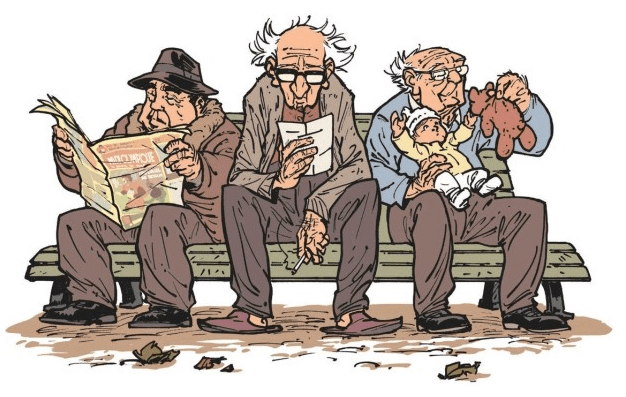
Joey, Donny and Me

So here we are, just three old codgers doddering along while trying to make it through the day.  There is, of course, a distinct difference between me and the other two … those guys are seeking the highest office in the land, while I am trying to remember where I parked my car.

As the debate rages over whether “old guys” should be able to run for President, I find myself in a unique position: the three of us are in the same age bracket … Biden is 81, Trump is 77 and I am 79.  That being the case, my advice … one “senior citizen” to another … is simply this: give it up!

Both of those guys are well past retirement age, and they may not be aware of all they are missing out on: … the senior coffee at McDonald’s … the “Early Bird” dinner specials at Denny’s … the right to wear black socks with Bermuda shorts.  Yes, were they to withdraw some of us might miss their constant barrage of garbled messages and malapropisms defying interpretation but I, for one, could cope.

Difficult though it may be to discuss, cognitive decline is a normal part of aging, and is most common in people over the age of 70.  That said, as we go about deciding who we should choose to lead our nation in dangerous and tumultuous times, it is foolhardy to base that choice upon which 80-year-old we believe to be the most competent.

Personally, I think I still, for the most part “have it together” … but earlier this evening I found myself, once again, trying to figure out which of the three remotes will actually allow me to record one TV program while watching a different one.  I shudder at the possibility of a similar level of confusion and dissonance affecting the decision-making of the person charged with managing the nuclear launch codes.

Yes, I know this last is an “over the top” comparison, for the President would always have advisors and senior staff on hand to help manage decision-making in a critical incident.  But thinking back to January 6, 2021, I recall there being a goodly number of high-ranking government officials in attendance at the United States Capitol that day, and we know how that turned out.

It is hard to imagine a job imbued with more physical and mental pressure than that of President.  That said, one wonders at the lack of an upper age limit for those seeking that position.  In other high stress/responsibility professions, workers must retire before any decline in mental or physical capacity might endanger others.  Examples include airline pilots, air traffic controllers, police officers, fire fighters, and members of the military.  In addition, a number of states have retirement thresholds for judges. 

While the issue of possible mental decline in our octogenarian Presidential candidates seems to leave voters with a Hobson’s Choice, psychologists analyzing data collected over a number of years have some good news for us … they have found that a person’s character tends to remain stable over time.  This, for me, is very good and comforting news.

And it makes the choice on election day much easier.

To Protect and Serve? Really?

Formed in 1917, the New York State Police has much in common with the Catholic Church.  Both organizations are built around the notion of doing good, helping and protecting others, and providing a beacon of hope for those in need.  Another notable similarity between the Catholic Church and the NYSP … until 1973, when women first joined the State Police, the ranks of Priests and Troopers were composed only of men.

There is at least one other way in which the Catholic Church and the NYSP are alike … both entities place the very highest priority on safeguarding their image.  And if a recently surfaced case from upstate New York is any indication, some State Police members have proven themselves equal to Catholic prelates in their willingness to ignore and denigrate victims of ghastly behaviors perpetrated by their employees.

In the matter at hand, the Albany Times Union reported in April, 2024, the breathtaking details of Roger Coon, a now-deceased State Trooper who, in 1982, was allowed to retire from the force despite credible allegations of child sex abuse having been made against him.  It was later determined that this predator had, for years, been abusing young boys while on duty and in uniform, yet he was permitted to leave the State Police without criminal charges or disciplinary action, and with his full pension intact.

The Criminal Justice system, though, had not heard the last of this pervert, for a scant two years after leaving the State Police, Coon was sentenced to three years probation after pleading guilty to the molestation of three boys between the ages of 10 and 12.  Notably, the allegations in his case detailed more than a dozen incidents that took place immediately before and after he left the State Police.  Finally, in 2001, he was sentenced to six months in jail and five years’ probation for the sexual abuse of a 9-year-old boy.  This irredeemable deviant died in 2003.

It is important to note that when information about Coon’s criminal behavior first became known, the State Police took a page from the playbook of those Catholic leaders who worked tirelessly over the years to protect the image of the Church, while downplaying the horrific scandal of child abuse.  A written recommendation from a NYSP Investigator is especially telling:

Since the Saratoga County district attorney has elected to forego any criminal prosecution and Coon is no longer subject to division disciplinary proceedings, further investigation into this matter would only provide for possible widespread public knowledge and embarrassment to the division.

In other words, rather than conduct a wider search for other children who might have been harmed by this pedophile, the primary goal suggested by the author of this report was that, first and foremost, the image of the organization be protected.  Put differently, he proposed that the State Police should “keep the lid on things” and, when it came to the possibility of any additional victims, well, everyone would just have to keep their fingers crossed that none would come forward.

Given the concerns over image expressed by the Investigator above, one is left to wonder whether things might have turned out differently had the allegations against Roger Coon been fully investigated when they first surfaced.  How would the public and the media have reacted?   Would knowledge of the perverted actions of that one Trooper have irreparably tarnished the reputation of the State Police?  Would making public the results of a meticulous investigation have helped or harmed the stature of that agency?  In short, would the image of the NYSP have been enhanced or diminished by a demonstrated willingness to deal quickly and seriously with malfeasance within its ranks?

What is abundantly clear is that after forty-two years, this case and the manner in which it was handled have created a public relations nightmare for the New York State Police, while resurrecting the pain endured by victims of child sexual abuse.  Two days after their initial report on this case, the Albany Times Union published an editorial on this matter with a damning and accurate title:

A Stain on the Badge

According to Hillary

No, not that Hillary!  

But I know what you were thinking … in the midst of a crazed election cycle, you expected another dose of political blather.  Well, not to worry for, like many, I have had it up to here with the current unceasing stream of extremist and partisan nonsense.

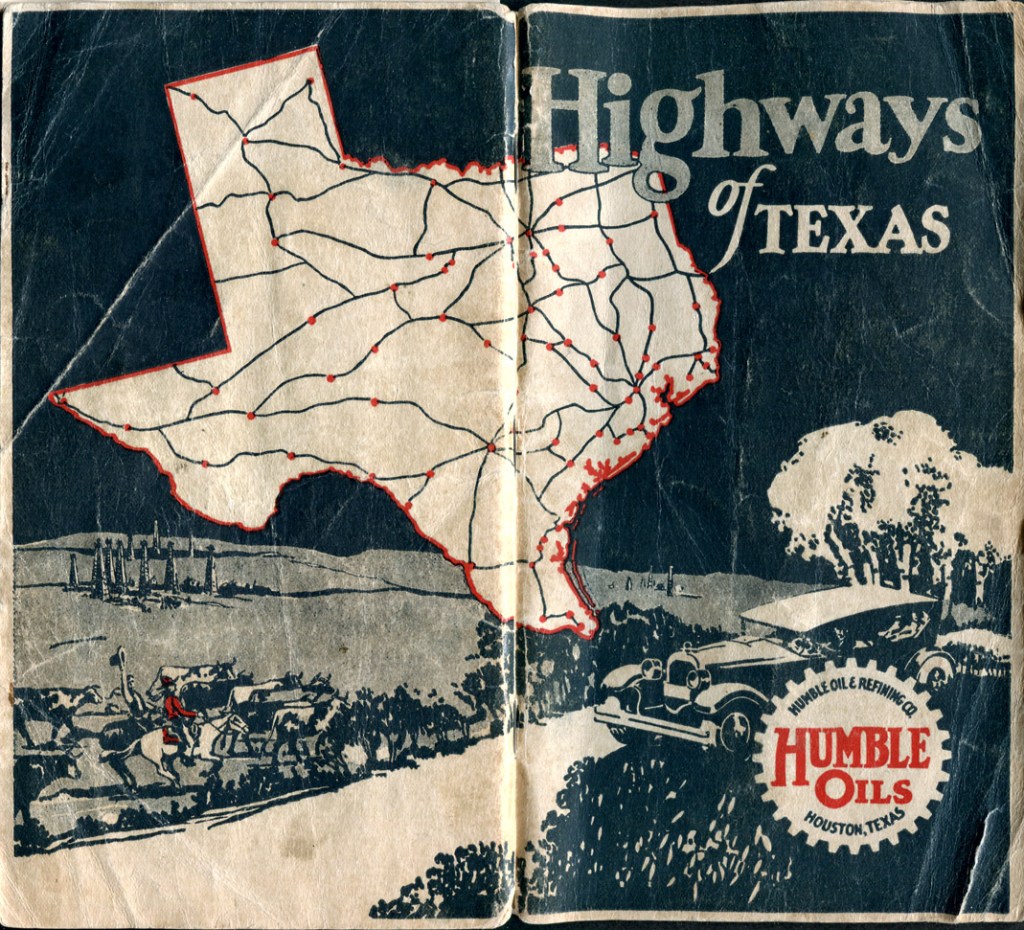
Instead, the Hillary referenced in the title is Sir Edmund Hillary and, more specifically, his immortal response when asked why he chose to scale Mount Everest in 1953: “Because it is there.”  For Bonnie and me, these words help explain why we decided, several years ago, to visit all the counties in the state of Texas … and there are 254 of them.  Yes, that’s right … 254 … and we did it because, well, they are there.

Since moving to Texas more than 35 years ago, we had traversed many of the state’s major highways and population areas. But with the more remote counties having eluded us, we decided to check them off … the Panhandle … the Rio Grande Valley … Deep East Texas … the Piney Woods … the Big Bend.  Our quest, no doubt, would have made Don Quixote nod with approval, but we finally pulled it off.

Along the way we met some wonderful folks, enjoyed breathtaking scenery, and partook of excellent food … the pie in Dripping Springs … the steak in Amarillo … the wine in Del Rio and St. Jo … the barbecue in Llano.  We also continued our love affair with Minor League baseball by taking in games with the El Paso Chihuahuas, the Big Bend Cowboys, the Amarillo Sod Poodles, the Midland Rockhounds, the Corpus Christi Hooks, the Frisco Roughriders and the Cleburne Railroaders.

As we rambled about the Lone Star State, we came to appreciate the  genesis of the old saying: “The sun has riz, the sun has set, and here we is in Texas yet.”  Throughout our journey, though, we remained inspired by Willie Nelson’s well-known song “On The Road Again” and, in particular, the way he describes his affection for travel: “… goin’ places that I’ve never been,” and “ … seein’ things that I may never see again.”

Willie’s joy in travel (and ours) is captured, perfectly, in the next stanza of that iconic work:

And I can’t wait to get on the road again

Looking Down the Road

Ever the comedian, George Burns commented about his advancing age this way:  “When I get up in the morning I check the obituaries.  If I’m not there, I have breakfast.”

While I continue to chuckle at Burns’ many observations about getting on in years, the fact that I am about to enter my ninth decade makes we wonder … how in the hell did this happen?  And so quickly?  It seems like only a moment ago I was a kid trying to get up the nerve to climb the monkey bars behind Park School in Ossining, New York, and now, all of a sudden, I am struggling to remember why I walked into the laundry room.

Fortunately, I am in relatively good health, and I can point with some comfort to ancestors who have lived long and productive lives.  But there is no doubt that I am closer to the end than to the beginning, so the question becomes: how to make the most of the time remaining? 

One important strategy, I believe, is to avoid the family drama that colors the lives of so many … tensions … silences … withdrawal … something said 25 years ago.  Frankly, those sorts of things used to cause me distress … now they just make me tired.  Notably, and as with so many other things, my mother was correct in her prescient declaration: “I prefer to spend time with people who care about me.”

Conversely, the opportunity to grow old with my life partner of almost sixty years is a singular joy that I know is denied many.  She and I are fortunate to live in a retirement community surrounded by kind and caring folks of our age, and the close proximity of children and grandchildren comforts us in the knowledge that their love and support are always close at hand.

In 2016, country music icon Toby Keith was paired with Clint Eastwood at a celebrity golf tournament in California.  During their time together, Keith asked Eastwood how, in approaching his 88th birthday, he had such relentless energy to which Eastwood replied:  “I just get up in the morning and try to be productive.  I don’t let the old man in.” 

Inspired by Eastwood’s words, Keith, in 2018, wrote the ballad “Don’t Let The Old Man In.”  Among the thoughtful lyrics in that song are these: “Ask yourself how old you would be if you didn’t know the day you were born.”  Powerful words, especially as they urge us to consider the way in which we frame the lives we live … and the way we see ourselves … each day.

The chorus of Keith’s song concludes with meaningful guidance for those of us wondering how best to face the future:

When he rides up on his horse

And you feel that cold bitter wind

Look out your window and smile

Don’t let the old man in

Do No Harm?

Although we moved across the country more than 35 years ago, we continue to maintain online subscriptions with two newspapers in communities where we used to reside. These are places that hold great meaning for our family, so staying in touch with events and people in those parts is always enjoyable.

Except when it isn’t.

A recent article, for example, reported that James Garisto, a Catholic priest from Poughkeepsie, NY, was arrested in Philadelphia on charges related to the sexual abuse of two young boys.  And to the surprise of absolutely nobody, reports indicated that employees at his parish were aware of his outrageous behavior, but compensated him nonetheless for expenses related to travel with his victims.

Like so many other similar cases, Garisto groomed and then assaulted his victims by, first, ingratiating himself to their families … who, after all, would have concerns about the motives of a beloved priest?  According to Mike McDonnell, communications director of SNAP, Garisto: “… was protected by the bishop simply because he was a charismatic neighborhood priest,” going on to point out that: “… abusers gain trust by families and are held on a pedestal.”  If a child were to come forward saying they were abused by a character like Garisto, McDonnell says, that child would have to wonder: “Who is going to believe me … they love this guy.”

Adding to the shame and hurt of this awful series of events, it played out in a city … Poughkeepsie … where the monstrous Gennaro “Father Jerry” Gentile harmed many young men and their families before being outed and then laicized.  When Gentile’s despicable acts at St. Mary’s parish and other places were finally revealed and reported on, his picture appeared on the front page of the New York Daily News under the headline: “Twisted Journey of a Problem Priest.” 

In the Garisto matter, the Archdiocese of New York, as usual, offers all the requisite platitudes while noting: “ … we take seriously every allegation of abuse, however, we cannot comment on the specifics of this case while there are still active criminal and civil cases pending.”  In response, the family of one of his victims suggests that the continuing problem of sexual abuse can be laid directly at the feet of church leaders pointing out:

As angry as I am at the actions of Garisto, I am more angry with the Catholic Church that allows this, moving these men from parish to parish without being advocates for these men to be jailed.  They move them and give them access to vulnerable kids who completely put their trust in a priest or a nun, and then the devastation that is caused as a result of that, that’s what I’m truly angry about.

In 1962, Pete Seeger wrote the classic protest song “Where Have All the Flowers Gone?”  More than sixty years later, the prescient chorus of that piece speaks to the continued horrors of clergy sexual abuse, and the unconscionable blindness of Catholic leadership:

When Will They Ever Learn?

Special Connections

Growing up in New York State, I have fond memories of my grandfather who, after much prodding, would talk about his service in the US Army.  I especially enjoyed hearing him tell of his part in the Pancho Villa Punitive Expedition along the Texas-Mexico border in 1916 and 1917, followed by his tour in France at the end of World War I.  My grandfather served under the command of General “Black Jack” Pershing (and a Lieutenant by the name of George Patton), and I have always been moved by the handwritten note on his discharge papers: “Service Honest and True.”

When speaking of his time along the border, my grandfather would tell of places with mysterious-sounding names like Lajitas, Terlingua, Presidio and Marfa … places which, as a youngster, lived only in my imagination.  But since moving to Texas more than 35 years ago, I have made a number of trips to the Big Bend region and have come to know these places well.  And as others familiar with those parts might agree, a visit there exposes one to a special kind of desolate beauty, and a landscape that has changed very little since my grandfather served there more than a century ago.

Over the years, I have had the good fortune to be able to take my grandsons to the Big Bend, and to show them where my grandfather … their great-great-grandfather … had served.  There is something almost magical in being able to stand on the grounds of the long-ago cavalry fort in Lajitas, while looking across the Rio Grande River (a mere stone’s throw away) at the same mountains and desert over which  Pershing’s troops pursued Pancho Villa in the interest of protecting the United States border.

One grandson who visited the Big Bend with me as a young boy is, himself, now a Sergeant in the US Army.  And, in a circumstance that can only be described as perfect symmetry, he and his unit are currently assigned to assist with security along the Texas-Mexico border.  And though the precise nature of my grandfather’s assignment and that of my grandson may differ, there is an undeniable kinship in their efforts … separated by more than 100 years … to safeguard the United States and to protect US citizens.

Though we were looking forward to seeing our grandson over the upcoming holidays those plans will, obviously, have to be put in abeyance.  But as we lament the fact that he won’t be home with his family this year, we take enormous pride in him and the work he and his colleagues do every day to keep us safe and secure. 

It is our fervent wish that all the men and women serving in the US military be safe this holiday season and, as the saying goes: “Thank you for your service.”

Lights, Camera … Wait … What?

Pre-pandemic, we were regular moviegoers.  A nearby “multi-screen” theater made it easy for us to take in a couple of shows each month but with the hysteria about social distancing and assorted other hurdles, we simply stayed away.  And though things gradually returned to normal, we continued to remain home and watch Netflix.

Recently, with outdoor temps hovering above 100 degrees, we decided that a visit to the cinema (and an air conditioned theater) might be a good way to spend an afternoon.  And though no particular movie attracted us, the prospect of watching a Hollywood production in a comfortable environment was enough to draw us in.

Before taking our seats, we visited the concession stand … who, after all, can sit through a movie without munchies?  After ordering a small popcorn and a small beverage I thought my hearing aids had failed, for it sounded like the young man behind the counter said: “That will be $17.00.”   Turns out I had heard him correctly … seventeen dollarsfor popcornand a small drink

Very carefully, we transported this precious cargo of snacks to our theater, and settled in to enjoy the show.  Before our movie began, though, we had to endure a forty minute string of “coming attractions,” each less appealing than the one before.  In the midst of this assault on our senses, we looked at each other and wondered: “Who writes and produces this stuff?”

Currently, a work stoppage by actors and writers has shut down Hollywood, leaving movie lovers and theater groups in a panic.  And though sympathetic to those struggling for fair wages, if the drivel we saw in those previews is the best the film industry has to offer, I would not object to their staying on strike permanently.

Clearly, we “Senior Citizens” are no longer the “target demographic” for companies marketing most products or, in the case of Hollywood, seeking to draw crowds to the movie theater.  In many cases, executives guiding those sorts of efforts seem to assume people our age have a 9PM curfew, along with a propensity for yelling at youngsters to: “Get the hell off my lawn.”

For the foreseeable future, Hollywood is just going to have to manage without us … though I doubt they are concerned about this.  In the meantime, Netflix and our DVD collections of Inspector George Gently and The Sopranos will have to suffice.

We plan to be in bed by 9PM anyway.