Lock ‘Em Up!

For those interested in the salacious juncture of politics, extraordinary wealth and sexual abuse of children known as the Epstein Files, this is your moment in the sun.  Consider, for example … bitter and competing legal actions to expose or conceal details in those files … subpoenas … political battles over release of information … open discussion of criminal acts.

At the epicenter of things is the late Jeffrey Epstein who, following his 2014 guilty plea to criminal offenses involving children, was named a “level three” sex offender in New York (a lifelong designation for someone at high risk to reoffend).  A pervert to the end, he was arrested, again, one month before his reported suicide in 2019, on federal charges of sex trafficking minors in Florida and New York.

Adding to the stench is Ghislaine Maxwell, a British socialite currently incarcerated for recruiting young girls for Epstein.  Though serving a twenty year sentence for sex trafficking (including the procurement of a 14-year-old for sex abuse and prostitution), her input in this miasma is apparently of such value that she has been moved from a federal penitentiary to a minimum-security prison camp … with some speculating that a Presidential pardon may be in the offing.

As we slog through this torrent of legal and political noise, it is essential that we remember to embrace and support that group so central to this discussion, but so often overlooked:

The victims.

Bluntly, victims of child sex abuse have suffered unimaginable damage, and treating them as mere objects in the midst of this debate serves only to traumatize them further.  The harm inflicted by a pedophile is more than just physical … those who have endured sexual abuse as a child suffer, among other maladies, life-long social/relationship difficulties and Post Traumatic Stress Disorder.

Fans of the award-winning animated series, South Park, have watched its new season be unmercifully critical of the current President and his administration.  In response, Secretary of Homeland Security, Kristi Noem, lashed out at this fictional television show declaring that the mission of DHS is to “… remove murderers, gang members, pedophiles, and other violent criminals from our country.”

Kudos to Ms. Noem for highlighting pedophiles as among those evil-doers deserving of deportation.  If she is true to her word, we can look forward to televised images of serial sex abusers being wrestled to the ground alongside taco vendors and migrant workers before being carted off to their new digs at Alligator Alcatraz..


A Sign Of The Times

Though I have always taken seriously the right to vote, I have never aligned myself with one particular political party.  Instead, it has been my practice to remain informed on issues and on individuals running for office, and then to lend my support regardless of political affiliation.  Sometimes the outcome of an election has turned in favor of my choice, and sometimes it has not.  Regardless of the outcome, though, I always had faith in the system.

But as Bob Dylan put it: “… I was so much older then, I’m younger than that now.”  In other words, like Dylan, I have begun to doubt some of the things in which I once had inalterable faith.

Things, for example, like the orderly and civil conduct of government business, and strict adherence to the United States Constitution without regard to political affiliation … and … the guarantee of due process in criminal proceedings … and … the Posse Comitatus Act of 1878, prohibiting deployment of the military in American cities.  In this Orwellian environment, it is no surprise that a Florida Sheriff felt justified in announcing, recently, a return to law and order “Old West” style, declaring that stepping out of line at protests could “land ‘ya graveyard dead.”

For all these reasons, the June 14, 2025, “No Kings” rallies across the United States came just in time.  

In Fort Worth, Texas, the rally took place in a shaded park near downtown and, never having participated in an event of this sort, two octogenarians (Bonnie and me) approached the gathering crowd with some trepidation.  What could we expect?  Would we fit in?  Was there going to be violence?  Would extremists hijack the day?  And most important … would there be restrooms nearby?

I am pleased to report that our experience at the rally was both uplifting and confirming … especially since we found ourselves in the midst of so many folks our age.  Those in attendance spoke to a range of causes, with the central notion being that of a common striving for government accountability and adherence to the rule of law.  And while it was hot there in the park, event organizers provided water and made sure to pick up any trash and … thankfully … the line for the restrooms was relatively short!

Home-made signs were in abundance … many very creative … some obscene … but all connected in one way or another to the theme of the day.  One sign, in particular, stood out, for it captured … perfectly … the reason why we were there:

My Grandkids Know I Did Not Remain Silent!  No Kings!!

If there were something I would want our seven grandchildren to grasp from our attendance at this rally, it would be that each of them should take, seriously, what the sign suggests … do not remain silent!  They do not have to agree with us on issues … we know some of them do not … but we love them all, and we encourage them to be heard on matters of importance to them and to our nation.

Incidentally, John Spitzberg of Gainesville, FL, is my newest hero.  At a rally outside the Supreme Court, Spitzberg … age 87 and  a veteran … was arrested for crossing a police line.  Taken into custody after refusing attempts to get him to move back, he said he wanted to be with other veterans who had already been arrested.  Notably, it took two officers to move Spitzberg to a police van … one to zip tie his hands behind his back and lead him by the elbow, and the other to push his walker.  When asked how he felt about having been arrested, Spitzberg said: “I’m just beginning, my friend.  I’m gonna just get a little sleep, and I’m starting again.”

One of the most powerful moments at the Fort Worth rally occurred when 60 women in silent formation and dressed as Handmaids, marched into the park carrying with them a banner reading: We The People Were Not Meant to Kneel.  Their breathtaking appearance was a vivid reminder of the way in which Margaret Atwood, author of The Handmaid’s Tale, warns of the ease with which a democracy can fail:

That was when they suspended the Constitution.  They said it would be temporary.  There wasn’t even any rioting in the streets.  People stayed home at night, watching television, looking for some direction.  There wasn’t even an enemy you could put your finger on.

Is This Who We Are?

In the opening sequence of the 1942, film Casablanca, we follow a police officer searching for refugees in flight from the Nazis. Stopping a civilian for investigation, the officer … speaking in a carefully modulated German accent … demands: “May we see your papers, please?”  

It should come as no surprise that this heart-stopping sequence has become a cultural metaphor for life in a repressive state.  And, at the risk of putting too-fine-a-point on the issue, one is left to wonder whether the fictional event just described might not be a suitable analogy for the world around us today.

Like every American, I want to live in a safe and secure world.  And while I believe illegal immigrants have no place in our country, it is essential that the rule of law … and, especially, due process … be adhered to when it comes to deportations. I am, of course, fully aware that this view is not shared by some in positions of political authority. 

Needless to say, I am not personally acquainted with Kilmar Abrego Garcia, the Maryland resident who was deported, recently, to a “super max” prison in El Salvador.  The details of his status in the United States have been widely reported but, the most telling aspect of this matter has to be the government’s acknowledgment that his banishment was “a mistake.”  In other words, he should never have been sent to incarceration in a foreign country.

Most of us, when we make a mistake, take steps to make things right … but that is not what happened here.  Instead, we were witness to a press conference with President Trump and Nayib Bukele, the self-described “world’s coolest dictator” of El Salvador, both chuckling about Garcia’s plight and Bukele’s refusal to return him to the US.  It was at this event that Trump made the stunning suggestion that expulsions of this sort might be suitable for “home grown” criminals as well.

I do not know whether Garcia is a member of the violent MS-13 gang or not but, regardless, the US Constitution grants him the right to due process, and the highest court in the land … the US Supreme Court … has ordered that his return be “facilitated.”  As of this writing, though, the government has not complied with that ruling.

During a recent interview marking his first 100 days in office, President Trump described a photograph showing various tattoos on Garcia’s hand.  In that they included the letters and numbers M,S,1 and 3, the photo was offered as evidence of Garcia’s membership in that notorious group (and, therefore, justifying his deportation).  According to a variety of sources, though, those letters and numbers were “Photoshopped” onto the original image, a fact which Trump vehemently denied.

Sigh.

Among his many prescient observations, German philosopher Theodor Adorno (1903-1969) suggested that a nation’s descent into hell begins when all questions of truth are converted into questions of power.  Further, when a government attacks the distinction between true and false it does so, according to Adorno, in furtherance of its own version of reality.

Sound familiar?  Might Adorno have been ahead of his time in contemplating the sort of government that rejects criticism by using such phrases as “fake news” and “media hoax”?

Adding to the mix in this dystopian world, Senior White House Antiterrorism Advisor Sebastian Gorka has gone so far as to suggest that Americans should not question government decisions about deportations.  In Gorka’s universe, if you are not on the side of the government, you are in league with terrorists and illegal aliens, adding: “… you have to ask yourself: Are they technically aiding and abetting them? Because aiding and abetting criminals and terrorists is a crime in federal statute.”

For a reasoned response to Gorka’s view, we need look no further than the words of the 26th President of the United States, Theodore Roosevelt who, in 1918, wrote:  

To announce that there must be no criticism of the President, or that we are to stand by the President, right or wrong, is not only unpatriotic and servile, but is morally treasonable to the American public.

To be clear, I am not suggesting that we are … or will soon become … a totalitarian state.  Neither do I believe that we should countenance criminals in our midst.  We would be well-advised, however, to care about the fate of Kilmar Abrego Garcia, for the way in which he is treated will say much about how we, as a nation, view and treat others … including those like you and me.

Begging Your Pardon

In the struggle to keep my wits about me amid the current political maelstrom, I am reminded of the old Saturday Night Live skit featuring Roseanne Roseannadanna (played by Gilda Radner) which she always concluded with the line:  “It’s always something.” 

Consider, for example, the recent confirmation hearings for top government leadership positions and the nominees who, as a whole, seemed to have fallen out of a clown car at the Barnum and Bailey Circus.  Whether it was refusing to call a traitor a traitor … denying past denunciation of vaccines … trying to explain away a promise to turn FBI Headquarters into a Museum of the Deep State … or dismissing widely reported sexual indiscretions and excessive drinking … one is left to wonder how, on earth, these people could have been nominated in the first place .  

It is as if we have all stepped “Through the Looking Glass” into an alternate reality where, in the words of Lewis Carroll, Alice finds her world reversed and turned upside down. .

Disheartening as those hearings may have been, they pale in comparison to the unforgivable mass pardons given to 1,500 individuals convicted of criminal offenses related to their actions at the US Capitol on January 6, 202l.  We recall, of course, the hollow assurances that consideration would be given to pardons only on a “case by case” basis, and that those who attacked and injured police officers would not be released but, as we now know, those weren’t promises … they were lies.

As a retired police officer I am not only deeply offended by these pardons … I am also fearful of what executive decisions of this sort portend for the future.  Consider the comments from one individual who was convicted of Seditious Conspiracy … upon his pardon and release, he said he wants the police to “feel the heat,” while demanding that the FBI agent who testified against him be investigated.  The question begging an answer, of course, is what sort of nightmarish society have we become?

Notably, the Fraternal Order of Police (FOP), the nation’s largest police union, had endorsed the candidate who was elected president in November.  On Inauguration Day, though, support from the FOP and its membership carried no weight at all in the decision to issue pardons to 1,500 lawbreakers, including those who assaulted and injured law enforcement personnel.  In response, the FOP issued a tepid joint press release with the International Association of Chiefs of Police in which the two organizations declared themselves “deeply discouraged.”

Amidst the fallout from these misplaced pardons, it was refreshing to hear a powerful voice of reason raised by Pamela Hemphill from Boise, ID.  She had served 60 days in jail after her plea of “guilty” to a misdemeanor charge for her actions on January 6, yet, when offered a presidential pardon, she refused to accept it.  In explaining her decision, Hemphill said she pleaded guilty because she was guilty, and that to accept a pardon would have been a slap in the face to capitol police officers, the rule of law, and the nation.  Further, she said, it would have contributed to the false narrative that January 6, was nothing more than a peaceful protest.

Wow!  Accepting personal responsibility for one’s actions!  One can only wish that such a radical idea might catch on!

Though long since retired from active law enforcement, my bond with the men and women in policing remains strong.  That being said, I shudder when sovereign citizens, flat-earth proponents, and others resist cordial and customary law enforcement interactions, while recording those contacts in hopes of posting a police misstep on YouTube.  We should not be surprised if the recent release of convicted law breakers for political purposes reenergizes those with a mind to torment those upon whom we rely so heavily.   

Those fortunate enough to have been around during the 60’s and 70’s will recall that era as being characterized by vigorous conflict between law enforcement and an amorphous counter-culture group known, loosely, as “Hippies.”  Tensions were often high between those two bodies, leading to a catchy phrase popularized by the police:“Do you need help?  Call a hippie!”

With the recent unconscionable pardons demonstrating clear political disdain for law enforcement, police officers should be forgiven for resurrecting that phrase with only a slight modification: “Do you need help?  Call a politician!”

A Real Character

As a young boy, I lived less than one block from our local public grade school.  Since I could walk there each day, this meant that the only time I boarded a school bus was for the once-weekly ride to St. Ann’s Catholic Church for “release time” education classes, where I would learn about the tenets of my faith.

Like many young men, I served as an altar boy, participated in CYO sports and summer camps, rounding things off with one year at a Catholic high school.  Suffice it to say that the lessons learned through these experiences provided clarity about what was right and what was wrong, and a template within which I could, ideally, make right choices.

Being much older now, it is looking more and more like that time spent memorizing the Ten Commandments and absorbing the Church’s teachings on appropriate behavior was a waste of my time.

Yes, things have changed over the years in the Catholic church … I often think of George Carlin’s response upon learning that we could eat meat on Friday: “What about all the people doing time on the meat rap?”  Carlin was a comedian, of course, but there was nothing humorous in Cardinal Timothy Dolan’s recent observation that Donald Trump “takes his Christian faith seriously.”

What the hell?  I mean … really … what the actual hell?

Was Dolan talking about THAT Donald Trump?  The man whose personal choices and actions over the years have left many of us slack-jawed?  Is this the individual who Dolan would hold up before the faithful as a paragon of virtue?

One way to measure a person’s character is to consider whether we can comfortably tell a child … “be like him” … or “be like her.”  In the case of Donald Trump, how many of us can say that?  Given what we know of his character, I suspect that few of us … with the obvious exception of Cardinal Timothy Dolan … would be able to point to Trump as a moral touchstone for our children.

This screed, by the way, has nothing to do Trump’s politics or policies … those have been, and will continue to be, discussed at length and with great vigor elsewhere.  Instead, this is about a Catholic leader lauding someone who he sees as a moral icon worthy of emulation, while many of us are left to wonder at how far the Church has strayed from what we understood to be its teachings on rightness and morality.

I realize that both my knowledge and practice of religion are rudimentary and even elementary.  I do not, after all, possess the wisdom or intellectual horsepower to make a nuanced theological argument about those things I have believed to be bedrock principles of the Catholic Church.  Apparently, I have a lot to learn.

At some level, Cardinal Dolan’s identifying Donald Trump as someone who “takes his Christian faith seriously,” is but one more example of Catholic leaders being, at the very least, poor judges of character.  As evidence, one need look no further than the many pedophile clergy who were recruited, trained, ordained and then assigned to priestly duties where they sexually abused children before being transferred elsewhere to continue their evil deeds.

There is a word for those among us who profess to have particular moral beliefs but behave in ways that are not sincere.  That word is hypocrite.

Shame on you, Cardinal Dolan.

Joe and the … Wha-a-t?

Like many people stuck in traffic at a red light I look around at other cars and, very often, smile at the stickers and messages people put on display.  College affiliation … favorite sports team … cute sayings intended to evoke a chuckle … political candidates favored by the vehicle owner.

Recently, though, I found myself stopped behind a car exhibiting multiple messages that startled me, and which made we wonder … what on earth is this guy thinking?  What would cause someone to put this sort of display so clearly in the public eye?  Does this person have children?  Have they seen what the rest of us are forced to see when stopped behind him?

Here is what I am talking about:

The first image was an oversized sticker with the wording: “F*** Joe and the Hoe” (I have obscured the obvious profanity).  “Joe,” in this case was, of course, Joe Biden and, doubtless, the “Hoe” was Kamala Harris.

The second emblem was a large “Punisher” decal in red, white and blue.  The “Punisher” logo, to some, suggests resistance to “unjust” laws, and is favored by a variety of terrorist and anti-government groups.

The third symbol on this car was that of the Ichthys (a fish logo containing a crucifix) which is a common symbol of Christianity.  Yes, like you, I wondered at the inclusion of this image in partnership with the other two.

As I sat there trying to decipher the meaning of this fellow’s collection, I had a brief “Grey Poupon” moment during which I considered pulling up next to him and asking him to roll down his window so we could discuss his views.  Unlike the old TV commercial, though, I have a feeling that instead  of a dash of lunchtime condiment, I would have been presented with (at the very least) a stout middle finger.

In a recent Wall Street Journal (WSJ) column titled We Are Starting To Enjoy Hatred, Peggy Noonan described the extreme political polarization she sees in this country, lamenting the fact that so many seem to relish and even celebrate the harsh, outrageous and dehumanizing things being shared online and elsewhere.  At the very least, Noonan suggests, we must remember that those we demean are our fellow countrymen and that we are obliged to go into the future together.

Similarly, in a recent WSJ op-ed piece, political commentator and comedian, Bill Maher, described the political divide in this country even more starkly, suggesting that there are places in this country where citizens, based solely on political beliefs, would not be welcome.  He wonders, for example, whether someone could comfortably ride the New York City subway wearing a MAGA hat, or go to a NASCAR race in a Biden T-shirt.

It is worth noting that Noonan and Maher represent polar opposite ends of the political spectrum.  That being so, when they each see a dangerous divide between the left and right in this country, the rest of us should pay attention.

Near the end of the movie The American President, actor Michael Douglas (playing the part of President Andrew Shepherd) unleashes a powerful challenge to his political opponent declaring: “We have serious problems to solve, and we need serious people to solve them.”  

There is always a debate about how closely fiction mirrors reality but, in present-day politics, Shepherd’s warning about the types of people we choose to follow and emulate rings especially true.

As for the motorist with the coarse and offensive display of messages on his rear window for all the world to see, perhaps it all comes down to simple  thoughtlessness on his part.  But as American conservationist and author Thornton Burgess once pointed out;

That’s the trouble with thoughtlessness; it never remembers other people.

The Road to Leavenworth

In the process of enlisting in the United States Air Force in 1962, the recruiter asked me which career choices I would prefer.  Being a naive seventeen year old kid, I selected several areas that looked interesting, and headed off to face the rigors of Lackland AFB in San Antonio, Texas.  Upon graduation from basic training I learned that despite my wishes, the Air Force had different plans for me, assigning me to something called Air Force Intelligence.  And, no, that is NOT an oxymoron.

My training for this assignment took place at several locations, and covered a range of topics and processes I would need to master in my new job.  We were made to understand the delicate and secretive nature of the work we would be doing, with specific and repeated emphasis on security.  Needless to say, I never doubted that security violations were taken very seriously and, if I remember correctly, mention was often made of Leavenworth, the maximum security military prison in Kansas.

As one might imagine, this trip down memory lane has been stimulated by the recent spate of widely publicized cases involving mishandled sensitive and highly classified government documents.  As a matter of fact, if reports are accurate, some of the national secrets put at risk by these breaches involve plans outlining strategies our military might employ in the event of military attack on the United States.

Let me say that again … it has been reported that these outrageous security failures could have revealed and endangered military plans for the protection of the United States.

Clearly, my personal umbrage here flows from my experience as both a military veteran with a respect for national security, and as an American citizen.  Beyond that, though, my outrage is made even more intense by the fact that my grandson is in the military meaning that, for me and any other citizen with a loved one serving to protect us, this is more than a mere academic discussion.

When all is said and done, it matters not in the slightest whether secret government documents were mishandled by a low-level enlisted Airman using sensitive information to impress friends in an internet chat room, or a former President displaying classified documents to dazzle big deal impresarios at a club in Florida.  Both of these malefactors must be taken to task and be made to answer for their actions.

Independent Special Prosecutor, Jack Smith, says it best:

We have one set of laws in this country and they apply to everyone

Hey … Look at Me!

One good thing that comes with getting older is the ability to reflect on past political campaigns, and to relish those times when candidates made sport of their opponents with style and humor.  Consider, for example, Barry Goldwater’s presidential campaign in 1964, and his slogan “In Your Heart You Know He’s Right.”  His opponent’s witty rejoinder of “In Your Guts You Know He’s Nuts” cut directly to the quick, but it was done with a degree of finesse.

In the 60’s and 70’s, Dick Tuck was a political trickster who engaged in a number of stunts that drove his opponents mad, including one notable escapade at a campaign rally where Richard Nixon was addressing a crowd from the back of a train.  In the midst of Nixon’s remarks, Tuck borrowed a conductor’s hat and waved at the engineer causing the train to pull out of the station as Nixon, still talking, watched the crowd fade into the distance.

Fast forward to 2023, where political discourse features character assassination, slurs and insults of every variety, threats of physical violence to candidates and their families, and a multitude of other forms of offensiveness and coarse behavior.  As an aside, it makes one wonder what would make someone choose to run for political office in our  present day maelstrom of unrestrained viciousness.

The current level of crudity in politics was made abundantly clear to me, recently, as I drove along a residential street not far from my home.  Imagine my shock as, in a neighborhood of nicely tended properties, I came face to face with a flag hanging from a front porch with the message “F*** Biden” emblazoned on it (I have obscured the obvious profanity).   There were no other political signs visible on the property … just that large banner (probably 4’ x 6’) with the jarring message clearly visible to anyone walking or driving past.

It is important to note that my revulsion at this obscenity was not based on the political persuasion of the person being pilloried; I would have been equally offended regardless of party.  But as I paused to reflect on what, if anything, I should do about this public affront, I came to the conclusion that someone displaying a brazen message of this sort on their front porch would likely not take kindly to my knocking on his door to discuss my concerns. 

Instead, I reported what I had observed to the city council, while inquiring about any laws or ordinances that might be in play.  Their prompt reply informed me that they were already aware of this obnoxious display but that, unfortunately, there was nothing they could do about it.  In fact, a Neighborhood Police Officer had even visited this house to ask that the flag be removed but, with no ordinance or law prohibiting its display, the occupant refused to take it down.  All this, by the way, in a community whose Vision Statement declares that it will be the most livable and best-managed city in the country.

For a citizen interested in showing support for a political party, position or individual, there are a number of ways to do so … writing letters of support … attending and speaking at government meetings … donating time or money to a campaign … running for office … and, of course, voting.  But posting a profane message on the front of your house … is that supposed to convince someone of the rightness of your political stance?

I could be wrong, of course, but I doubt the resident here has any expectation of winning others over to his point of view.  Instead, he is telling the world “It’s all about me,” and any impact his crude messaging has on passersby or his neighbors doesn’t bother him in the slightest.  In other words … you don’t like my flag?  Too Bad!  Deal with it!  And, more to the point, he is telling us all … “F*** You”

Other than the obscenity displayed proudly on his front porch, I don’t know anything about the person residing within.  I believe, though, that  the noted business and religious leader, Spencer Kimball, is right in suggesting:

Profanity is the effort of a feeble brain to express itself forcibly.

Burn Before Reading

If you happen to ask a military veteran what he or she did during their time in the service, don’t be surprised if they respond this way: “Well, I could tell you, but then I would have to kill you.”  This implies, of course, that what they did was so secret and “black ops” in nature that they are forever prohibited from talking about it.

Having spent my 1960’s-era enlistment assigned to Air Force Intelligence, I would be more inclined to answer this way: “Well, I could tell you what I did, but then I would have to bore you to death.”  In other words, collecting and analyzing data for a living was a tedious enterprise and, for the record, the term “Air Force Intelligence” is NOT an oxymoron.

Yes, the work was often monotonous, but my colleagues and I were never confused about the confidential nature of what we did and our absolute obligation to safeguard secret information and processes.  This point was emphasized constantly, and I had little doubt that a slip of the tongue or a misplaced document would result in my immediate incarceration at Leavenworth.

As you might suspect, this trip down memory lane was stimulated by the current kerfuffle over secret government documents being found, daily, in a variety of odd and insecure places, and in the custody of … well … nobody seems to know.  How, on earth, could this happen?  Weren’t the individuals in possession of these items given the same security warnings as those of us in the trenches? 

Incidentally, anyone interested in buying a shredder in or around Washington these days should not be surprised to find office supply stores sold out.  The reason is simple: politicians and government employees, both past and present and regardless of party affiliation, are likely combing through old files and collected documents in search of the odd misplaced classified material that could put them in the crosshairs of one or another ongoing investigation.

This is not to suggest that security breaches, whether intentional or accidental in nature, did not occur in the past.  They did.  But the cavalier manner in which government officials are treating this current debacle is both disconcerting and worrisome and, in my view, reflective of a  diminution of caution about things that, in the past, were deemed sensitive.  

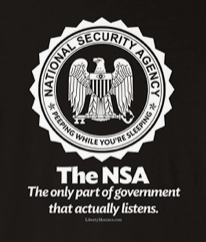
This became abundantly clear to me several years ago while driving along the Baltimore-Washington Parkway in Maryland.  As I approached the exit for Fort Meade and the National Security Agency I noticed, much to my surprise, an additional sign providing directions to the National Cryptologic Museum!  A museum!  At NSA!  

To fully appreciate my astonishment, it is important to know that during my tenure at this super-secret agency,  we always maintained that the letters “NSA” stood for “No Such Agency.”  But that was then and this is now … today, the public has access to exhibits and information which, in the past, would never have been displayed or even discussed outside a secure environment. 

When I think about the importance of security and the way that idea was inculcated in us some sixty years ago, I can only shake my head in wonder at what seems, today, to be a thoroughly lackadaisical approach to an issue with serious implications for our national security.  Further, It is disheartening to watch the machinations of various government functionaries performing damage control while, at the same time, casting blame upon others for embarrassing and dangerous security breaches.  

One very well-known individual in the realm of national security said this:

Two things about the NSA stunned me right off the bat: how technologically sophisticated it was compared with the CIA, and how much less vigilant it was about security.

That person just quoted is Edward Snowden, an American and naturalized Russian former computer consultant who, in 2013, stole and revealed highly classified information from the NSA.  By some accounts he leaked more than one million documents, the vast majority of which related to military capabilities, operations, tactics, techniques, and procedures of the United States.

Are You Talking to Me?

Do you remember the “good old days” when politicians and public figures behaved as adults, treated each other with respect and spoke only in well-mannered fashion?

I didn’t think so … neither do I.

But given today’s relentless barrage of pseudo-scandals and outrageous behavior, it is easy to understand why past public figures may have seemed a more-genteel bunch than our current crop.  A brief review of the history books, though, reveals a goodly amount of similarity to what we contend with today.  For example:

In 1800, Thomas Jefferson referred to President John Adams as: “… a blind, bald, crippled, toothless man who is a hideous hermaphrodite character with neither the force and fitness of a man, nor the gentleness and sensibility of a woman.”

Across his political career, two-term President Grover Cleveland had to contend with the assertion that he had fathered an illegitimate child, and his opponent’s relentless consequent chant of “Ma, Ma, where’s my Pa?”

And who can forget the historic duel in Weehawken, New Jersey, on the morning of July 11, 1804?   In that clash, Vice President Aaron Burr shot and killed former Secretary of the Treasury Alexander Hamilton because, well, Hamilton had allegedly insulted him at a dinner.

Today, the super-connected virtual world in which we reside hurls “news” (regardless of veracity) across the internet with but one click, while the vetting of information has become a process with which few seem to bother.  In this environment, it is impossible to ignore the glut of outright untruths and innuendo being paraded before us for the explicit purpose of character assassination or political gain.

Consider, for example, the torrent of vitriol heaped repeatedly upon United States Secretary of Transportation Pete Buttigieg who, as the first openly gay cabinet member in history, is the target of incessant attacks based simply on his sexual orientation.  As he goes about deflecting these scurrilous insults, he provides us with useful guidance on navigating this confusing and ill-tempered virtual world:

We have to be smart about where we direct our attention. I know the most shocking thing somebody said or did yesterday gets the most focus today, but if I were to make a list of the 10 or 20 or 50 or 200 members of Congress whose commentary or thoughts or words we should be debating or weighing right now, it wouldn’t be those two or three members of Congress who get the most attention on Twitter for the outrage of the day upon which they try to outdo each other.

Buttigieg is right, for racist, sexist and homophobic slurs fall below the lowest threshold for decency.  A major problem, of course, is the anonymity the web provides us for, after all, making these sorts of ugly comments directly to another person’s face can result in a punch in the nose.  Saying the same thing in an internet posting, though, merely puts one at risk of a brief stint in “Facebook Jail.”

Like it or not, we have become wed to the internet in multiple ways meaning we face a daily struggle to avoid being drawn down some digital rabbit hole in pursuit of more “information” on the “scandal-du-jour.”  For our own sanity it is important to be discerning in the information we rely upon, while avoiding those spectacles that are nothing more than just, well, spectacles.

It is safe to state that the principles of dignity and self-respect are at risk among elected officials today … a criticism that applies equally across the political spectrum.  For example, in a recent interview a Democratic senator uttered one “f***,” two “f***ings,” one “bull****,” one “p***ed off” and one “they s**k.”  Not to be outdone, a number of Republican politicians have taken to posing with “Let’s Go Brandon” signs; one even ended his floor speech with those words and a fist pump.  The “Let’s Go Brandon” phenomenon is, of course, code for “F*** Joe Biden.”

These sorts of profane insults have even taken on hybrid form.  At a recent dinner, a Republican governor referred to former President Trump as “F***ing Crazy,” prompting one Democrat to note that Republicans, today, are using “F” bombs more frequently than at any time since the Nixon administration.

It’s getting so that broadcast political events will have to have viewer warnings similar to what we see in movie theaters.

Frankly, this sort of thing used to bother me, but now it just makes me tired.  As a remedy, I have begun following my own advice by taking an occasional break or sabbatical from the digital political battlefield, while seeking out those things that are really important.

Like, for example, watching kitten videos on YouTube.