Looking Down the Road

Ever the comedian, George Burns commented about his advancing age this way:  “When I get up in the morning I check the obituaries.  If I’m not there, I have breakfast.”

While I continue to chuckle at Burns’ many observations about getting on in years, the fact that I am about to enter my ninth decade makes we wonder … how in the hell did this happen?  And so quickly?  It seems like only a moment ago I was a kid trying to get up the nerve to climb the monkey bars behind Park School in Ossining, New York, and now, all of a sudden, I am struggling to remember why I walked into the laundry room.

Fortunately, I am in relatively good health, and I can point with some comfort to ancestors who have lived long and productive lives.  But there is no doubt that I am closer to the end than to the beginning, so the question becomes: how to make the most of the time remaining? 

One important strategy, I believe, is to avoid the family drama that colors the lives of so many … tensions … silences … withdrawal … something said 25 years ago.  Frankly, those sorts of things used to cause me distress … now they just make me tired.  Notably, and as with so many other things, my mother was correct in her prescient declaration: “I prefer to spend time with people who care about me.”

Conversely, the opportunity to grow old with my life partner of almost sixty years is a singular joy that I know is denied many.  She and I are fortunate to live in a retirement community surrounded by kind and caring folks of our age, and the close proximity of children and grandchildren comforts us in the knowledge that their love and support are always close at hand.

In 2016, country music icon Toby Keith was paired with Clint Eastwood at a celebrity golf tournament in California.  During their time together, Keith asked Eastwood how, in approaching his 88th birthday, he had such relentless energy to which Eastwood replied:  “I just get up in the morning and try to be productive.  I don’t let the old man in.” 

Inspired by Eastwood’s words, Keith, in 2018, wrote the ballad “Don’t Let The Old Man In.”  Among the thoughtful lyrics in that song are these: “Ask yourself how old you would be if you didn’t know the day you were born.”  Powerful words, especially as they urge us to consider the way in which we frame the lives we live … and the way we see ourselves … each day.

The chorus of Keith’s song concludes with meaningful guidance for those of us wondering how best to face the future:

When he rides up on his horse

And you feel that cold bitter wind

Look out your window and smile

Don’t let the old man in

Do No Harm?

Although we moved across the country more than 35 years ago, we continue to maintain online subscriptions with two newspapers in communities where we used to reside. These are places that hold great meaning for our family, so staying in touch with events and people in those parts is always enjoyable.

Except when it isn’t.

A recent article, for example, reported that James Garisto, a Catholic priest from Poughkeepsie, NY, was arrested in Philadelphia on charges related to the sexual abuse of two young boys.  And to the surprise of absolutely nobody, reports indicated that employees at his parish were aware of his outrageous behavior, but compensated him nonetheless for expenses related to travel with his victims.

Like so many other similar cases, Garisto groomed and then assaulted his victims by, first, ingratiating himself to their families … who, after all, would have concerns about the motives of a beloved priest?  According to Mike McDonnell, communications director of SNAP, Garisto: “… was protected by the bishop simply because he was a charismatic neighborhood priest,” going on to point out that: “… abusers gain trust by families and are held on a pedestal.”  If a child were to come forward saying they were abused by a character like Garisto, McDonnell says, that child would have to wonder: “Who is going to believe me … they love this guy.”

Adding to the shame and hurt of this awful series of events, it played out in a city … Poughkeepsie … where the monstrous Gennaro “Father Jerry” Gentile harmed many young men and their families before being outed and then laicized.  When Gentile’s despicable acts at St. Mary’s parish and other places were finally revealed and reported on, his picture appeared on the front page of the New York Daily News under the headline: “Twisted Journey of a Problem Priest.” 

In the Garisto matter, the Archdiocese of New York, as usual, offers all the requisite platitudes while noting: “ … we take seriously every allegation of abuse, however, we cannot comment on the specifics of this case while there are still active criminal and civil cases pending.”  In response, the family of one of his victims suggests that the continuing problem of sexual abuse can be laid directly at the feet of church leaders pointing out:

As angry as I am at the actions of Garisto, I am more angry with the Catholic Church that allows this, moving these men from parish to parish without being advocates for these men to be jailed.  They move them and give them access to vulnerable kids who completely put their trust in a priest or a nun, and then the devastation that is caused as a result of that, that’s what I’m truly angry about.

In 1962, Pete Seeger wrote the classic protest song “Where Have All the Flowers Gone?”  More than sixty years later, the prescient chorus of that piece speaks to the continued horrors of clergy sexual abuse, and the unconscionable blindness of Catholic leadership:

When Will They Ever Learn?

Special Connections

Growing up in New York State, I have fond memories of my grandfather who, after much prodding, would talk about his service in the US Army.  I especially enjoyed hearing him tell of his part in the Pancho Villa Punitive Expedition along the Texas-Mexico border in 1916 and 1917, followed by his tour in France at the end of World War I.  My grandfather served under the command of General “Black Jack” Pershing (and a Lieutenant by the name of George Patton), and I have always been moved by the handwritten note on his discharge papers: “Service Honest and True.”

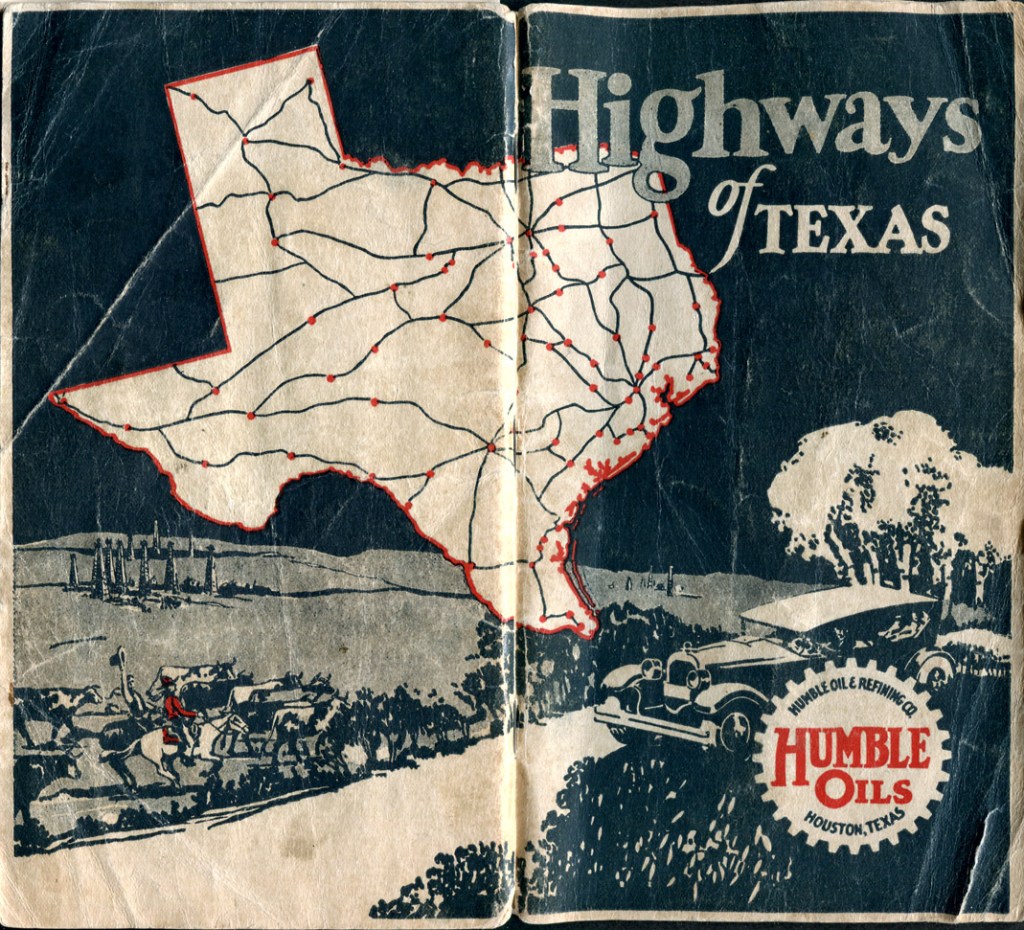
When speaking of his time along the border, my grandfather would tell of places with mysterious-sounding names like Lajitas, Terlingua, Presidio and Marfa … places which, as a youngster, lived only in my imagination.  But since moving to Texas more than 35 years ago, I have made a number of trips to the Big Bend region and have come to know these places well.  And as others familiar with those parts might agree, a visit there exposes one to a special kind of desolate beauty, and a landscape that has changed very little since my grandfather served there more than a century ago.

Over the years, I have had the good fortune to be able to take my grandsons to the Big Bend, and to show them where my grandfather … their great-great-grandfather … had served.  There is something almost magical in being able to stand on the grounds of the long-ago cavalry fort in Lajitas, while looking across the Rio Grande River (a mere stone’s throw away) at the same mountains and desert over which  Pershing’s troops pursued Pancho Villa in the interest of protecting the United States border.

One grandson who visited the Big Bend with me as a young boy is, himself, now a Sergeant in the US Army.  And, in a circumstance that can only be described as perfect symmetry, he and his unit are currently assigned to assist with security along the Texas-Mexico border.  And though the precise nature of my grandfather’s assignment and that of my grandson may differ, there is an undeniable kinship in their efforts … separated by more than 100 years … to safeguard the United States and to protect US citizens.

Though we were looking forward to seeing our grandson over the upcoming holidays those plans will, obviously, have to be put in abeyance.  But as we lament the fact that he won’t be home with his family this year, we take enormous pride in him and the work he and his colleagues do every day to keep us safe and secure. 

It is our fervent wish that all the men and women serving in the US military be safe this holiday season and, as the saying goes: “Thank you for your service.”

Lights, Camera … Wait … What?

Pre-pandemic, we were regular moviegoers.  A nearby “multi-screen” theater made it easy for us to take in a couple of shows each month but with the hysteria about social distancing and assorted other hurdles, we simply stayed away.  And though things gradually returned to normal, we continued to remain home and watch Netflix.

Recently, with outdoor temps hovering above 100 degrees, we decided that a visit to the cinema (and an air conditioned theater) might be a good way to spend an afternoon.  And though no particular movie attracted us, the prospect of watching a Hollywood production in a comfortable environment was enough to draw us in.

Before taking our seats, we visited the concession stand … who, after all, can sit through a movie without munchies?  After ordering a small popcorn and a small beverage I thought my hearing aids had failed, for it sounded like the young man behind the counter said: “That will be $17.00.”   Turns out I had heard him correctly … seventeen dollarsfor popcornand a small drink

Very carefully, we transported this precious cargo of snacks to our theater, and settled in to enjoy the show.  Before our movie began, though, we had to endure a forty minute string of “coming attractions,” each less appealing than the one before.  In the midst of this assault on our senses, we looked at each other and wondered: “Who writes and produces this stuff?”

Currently, a work stoppage by actors and writers has shut down Hollywood, leaving movie lovers and theater groups in a panic.  And though sympathetic to those struggling for fair wages, if the drivel we saw in those previews is the best the film industry has to offer, I would not object to their staying on strike permanently.

Clearly, we “Senior Citizens” are no longer the “target demographic” for companies marketing most products or, in the case of Hollywood, seeking to draw crowds to the movie theater.  In many cases, executives guiding those sorts of efforts seem to assume people our age have a 9PM curfew, along with a propensity for yelling at youngsters to: “Get the hell off my lawn.”

For the foreseeable future, Hollywood is just going to have to manage without us … though I doubt they are concerned about this.  In the meantime, Netflix and our DVD collections of Inspector George Gently and The Sopranos will have to suffice.

We plan to be in bed by 9PM anyway.

Order In The Court?

Raising a family in the 60’s and 70’s, I often found myself seeking out part time employment  to help make ends meet.  One job that was especially appealing was that of Little League umpire, for it allowed me to take part in a sport I loved, to work with youngsters, and to pull down the princely sum of $8.00 per game.

As a police officer, though, I had to clear the administrative hurdle of requesting approval from my employer before I could take my stance behind home plate.  The purpose, of course, was to make certain there would be no conflict between my calling balls and strikes for 10-year olds, and unbiased enforcement of the law in my real job.

Many years later, I was tasked with making the travel and associated arrangements for a senior Federal law enforcement official who had, graciously, accepted our invitation to speak at a conference we were organizing.  Pleased though we were that he would join us, I was taken aback by the eleven page questionnaire I had to complete in order for him to attend.  Eleven pages!

Among the queries were … will he be receiving a meal? … who is providing the meal? … what is the value of the meal? … will he be receiving an award? … what is the value? … what is the cost of travel and lodging? … who is paying for the travel and lodging?  While tedious, the purpose of this inquiry was to assure that nothing of value might be offered or accepted that could give rise to even the slightest appearance that this government official might be beholden to some person or institution.

Reflecting back upon the hoops I had to jump through as a young police officer seeking to officiate baseball games and, later, as organizer for a law enforcement gathering, recent events make me wonder whether certain government officials in positions of public trust cleave to an equally rigorous ethical standard.  I am talking, of course, about the United States Supreme Court, and recent reports that this august body might not be as, well, honorable as it claims to be.

As this matter unfolded, questions were raised, initially, about possible ethical missteps by only one or two members.  Gradually, though, more issues surfaced, with each begging further elaboration.  For example, the sale or purchase of property … acceptance of trips and vacations … sources of spousal income … failing to recuse after accepting gifts from individuals with matters before the court … and overall lack of transparency regarding financial disclosures.

The crux of the matter here, of course, is simple: though we expect every decision handed down by the “highest court in the land” to be based entirely on thoughtful and objective consideration of the facts, there will always remain a modicum of doubt about the motivation of any justice who may have benefitted from the largesse of an individual with an interest in the case at hand.

In 1951, Judge Irving Kaufman presided over the espionage trial of Julius and Ethel Rosenberg.  This widely respected federal magistrate spoke, this way, of the imperative connection of ethics to our judicial system:

The supreme court’s only armor is the cloak of public trust; its sole ammunition the collective hopes of our society.

More recently (Dallas Morning News, July 7, 2023) retired Texas District Court Judge Jerry Calhoon provided an eloquent, thoughtful and first hand appraisal of the issues at the very heart of this current debacle:

When I became judge of the 349th District Court of our state, I received an invitation to an annual fish camp gathering of attorneys for a weekend at the lake.  Although it came from a former classmate, I politely declined, reasoning that having never been invited before it was only my ascension to the bench that drew the invitation.  I wished to avoid any appearance of impropriety that the judicial ethics of our state requires.

Justices of the Supreme Court accepting hundreds of thousands of dollars worth of benefits from donors having interest in the workings of the court boggles my mind.  Then to read that some in the media think the only problem is their failure to report as the law requires makes me wonder what universe I live in.

Acceptance of these benefits is the problem.  Does anyone believe for a minute that these gifts were bestowed because of the scintillating wit or pleasing personalities their presence would bring to the gathering of the donor’s acquaintances?

I once was proud to be a member of the bar of the U.S. Supreme Court.  Now I feel as if my certificate of admittance has been denigrated by these justices.

Using the Hebrew word signifying truth or agreement, I can only add … Amen.

The Road to Leavenworth

In the process of enlisting in the United States Air Force in 1962, the recruiter asked me which career choices I would prefer.  Being a naive seventeen year old kid, I selected several areas that looked interesting, and headed off to face the rigors of Lackland AFB in San Antonio, Texas.  Upon graduation from basic training I learned that despite my wishes, the Air Force had different plans for me, assigning me to something called Air Force Intelligence.  And, no, that is NOT an oxymoron.

My training for this assignment took place at several locations, and covered a range of topics and processes I would need to master in my new job.  We were made to understand the delicate and secretive nature of the work we would be doing, with specific and repeated emphasis on security.  Needless to say, I never doubted that security violations were taken very seriously and, if I remember correctly, mention was often made of Leavenworth, the maximum security military prison in Kansas.

As one might imagine, this trip down memory lane has been stimulated by the recent spate of widely publicized cases involving mishandled sensitive and highly classified government documents.  As a matter of fact, if reports are accurate, some of the national secrets put at risk by these breaches involve plans outlining strategies our military might employ in the event of military attack on the United States.

Let me say that again … it has been reported that these outrageous security failures could have revealed and endangered military plans for the protection of the United States.

Clearly, my personal umbrage here flows from my experience as both a military veteran with a respect for national security, and as an American citizen.  Beyond that, though, my outrage is made even more intense by the fact that my grandson is in the military meaning that, for me and any other citizen with a loved one serving to protect us, this is more than a mere academic discussion.

When all is said and done, it matters not in the slightest whether secret government documents were mishandled by a low-level enlisted Airman using sensitive information to impress friends in an internet chat room, or a former President displaying classified documents to dazzle big deal impresarios at a club in Florida.  Both of these malefactors must be taken to task and be made to answer for their actions.

Independent Special Prosecutor, Jack Smith, says it best:

We have one set of laws in this country and they apply to everyone

Unbelievable … Just … Unbelievable

You really can’t make this stuff up.

As anyone who follows the news in the DFW area knows, for the past several months, Bishop Michael Olson of the Diocese of Fort Worth, has been involved in a very public conflict with Reverend Teresa Gerlach, Mother Superior of a group of cloistered Carmelite nuns in Arlington, Texas.  And for a production with a fully Catholic cast, the details (as we know them) are, well, pretty salacious.  For example:

Bishop Olson says Gerlach violated her vow of chastity with a priest from a different Diocese, asserting that she admitted the behavior.

Mother Superior Gerlach denies the accusations, saying that when interviewed, she was under the effects of anesthesia from surgery.

Olson ordered that daily Mass and Confessions for the cloistered nuns be suspended.

Gerlach, who is disabled, accused the Bishop of seizing all her electronic devices which she uses to communicate.

The Diocese released photos of what is described as a collection of various drugs, including marijuana,  at the Carmelite monastery.

The Mother Superior maintains that those photographs were staged by Diocesan staff. 

Whew!  If Grace Metalious were still with us and contemplating a sequel to “Peyton Place,” this debacle would seem worthy of a chapter!

But, wait a minute!  Though the name of Mother Superior Gerlach has been widely circulated in the media (and on the Diocese’s web page), the name of the priest allegedly involved in this event remains unknown.  How can that be?

Admittedly, we do not know the intimate details of the allegation but it would seem that, if true, that priest would have violated his promise of celibacy.  And yet he remains anonymous, refusing to confirm or deny that any inappropriate behavior occurred.  

Sadly, the Catholic Church has a long and sordid history of concealing the identities of predator priests and then transferring them, but this current outrage takes things to a different place.  Frankly stated, if the accused in this matter was a priest instead of a nun, it would come as no surprise to learn that the entire sorry event – like so many past cases of sexual misconduct – had been quietly swept under the carpet. 

One thing we know for certain is that when it comes to matters of the flesh, the Catholic Church will get it wrong every time.

Hey … Look at Me!

One good thing that comes with getting older is the ability to reflect on past political campaigns, and to relish those times when candidates made sport of their opponents with style and humor.  Consider, for example, Barry Goldwater’s presidential campaign in 1964, and his slogan “In Your Heart You Know He’s Right.”  His opponent’s witty rejoinder of “In Your Guts You Know He’s Nuts” cut directly to the quick, but it was done with a degree of finesse.

In the 60’s and 70’s, Dick Tuck was a political trickster who engaged in a number of stunts that drove his opponents mad, including one notable escapade at a campaign rally where Richard Nixon was addressing a crowd from the back of a train.  In the midst of Nixon’s remarks, Tuck borrowed a conductor’s hat and waved at the engineer causing the train to pull out of the station as Nixon, still talking, watched the crowd fade into the distance.

Fast forward to 2023, where political discourse features character assassination, slurs and insults of every variety, threats of physical violence to candidates and their families, and a multitude of other forms of offensiveness and coarse behavior.  As an aside, it makes one wonder what would make someone choose to run for political office in our  present day maelstrom of unrestrained viciousness.

The current level of crudity in politics was made abundantly clear to me, recently, as I drove along a residential street not far from my home.  Imagine my shock as, in a neighborhood of nicely tended properties, I came face to face with a flag hanging from a front porch with the message “F*** Biden” emblazoned on it (I have obscured the obvious profanity).   There were no other political signs visible on the property … just that large banner (probably 4’ x 6’) with the jarring message clearly visible to anyone walking or driving past.

It is important to note that my revulsion at this obscenity was not based on the political persuasion of the person being pilloried; I would have been equally offended regardless of party.  But as I paused to reflect on what, if anything, I should do about this public affront, I came to the conclusion that someone displaying a brazen message of this sort on their front porch would likely not take kindly to my knocking on his door to discuss my concerns. 

Instead, I reported what I had observed to the city council, while inquiring about any laws or ordinances that might be in play.  Their prompt reply informed me that they were already aware of this obnoxious display but that, unfortunately, there was nothing they could do about it.  In fact, a Neighborhood Police Officer had even visited this house to ask that the flag be removed but, with no ordinance or law prohibiting its display, the occupant refused to take it down.  All this, by the way, in a community whose Vision Statement declares that it will be the most livable and best-managed city in the country.

For a citizen interested in showing support for a political party, position or individual, there are a number of ways to do so … writing letters of support … attending and speaking at government meetings … donating time or money to a campaign … running for office … and, of course, voting.  But posting a profane message on the front of your house … is that supposed to convince someone of the rightness of your political stance?

I could be wrong, of course, but I doubt the resident here has any expectation of winning others over to his point of view.  Instead, he is telling the world “It’s all about me,” and any impact his crude messaging has on passersby or his neighbors doesn’t bother him in the slightest.  In other words … you don’t like my flag?  Too Bad!  Deal with it!  And, more to the point, he is telling us all … “F*** You”

Other than the obscenity displayed proudly on his front porch, I don’t know anything about the person residing within.  I believe, though, that  the noted business and religious leader, Spencer Kimball, is right in suggesting:

Profanity is the effort of a feeble brain to express itself forcibly.

Burn Before Reading

If you happen to ask a military veteran what he or she did during their time in the service, don’t be surprised if they respond this way: “Well, I could tell you, but then I would have to kill you.”  This implies, of course, that what they did was so secret and “black ops” in nature that they are forever prohibited from talking about it.

Having spent my 1960’s-era enlistment assigned to Air Force Intelligence, I would be more inclined to answer this way: “Well, I could tell you what I did, but then I would have to bore you to death.”  In other words, collecting and analyzing data for a living was a tedious enterprise and, for the record, the term “Air Force Intelligence” is NOT an oxymoron.

Yes, the work was often monotonous, but my colleagues and I were never confused about the confidential nature of what we did and our absolute obligation to safeguard secret information and processes.  This point was emphasized constantly, and I had little doubt that a slip of the tongue or a misplaced document would result in my immediate incarceration at Leavenworth.

As you might suspect, this trip down memory lane was stimulated by the current kerfuffle over secret government documents being found, daily, in a variety of odd and insecure places, and in the custody of … well … nobody seems to know.  How, on earth, could this happen?  Weren’t the individuals in possession of these items given the same security warnings as those of us in the trenches? 

Incidentally, anyone interested in buying a shredder in or around Washington these days should not be surprised to find office supply stores sold out.  The reason is simple: politicians and government employees, both past and present and regardless of party affiliation, are likely combing through old files and collected documents in search of the odd misplaced classified material that could put them in the crosshairs of one or another ongoing investigation.

This is not to suggest that security breaches, whether intentional or accidental in nature, did not occur in the past.  They did.  But the cavalier manner in which government officials are treating this current debacle is both disconcerting and worrisome and, in my view, reflective of a  diminution of caution about things that, in the past, were deemed sensitive.  

This became abundantly clear to me several years ago while driving along the Baltimore-Washington Parkway in Maryland.  As I approached the exit for Fort Meade and the National Security Agency I noticed, much to my surprise, an additional sign providing directions to the National Cryptologic Museum!  A museum!  At NSA!  

To fully appreciate my astonishment, it is important to know that during my tenure at this super-secret agency,  we always maintained that the letters “NSA” stood for “No Such Agency.”  But that was then and this is now … today, the public has access to exhibits and information which, in the past, would never have been displayed or even discussed outside a secure environment. 

When I think about the importance of security and the way that idea was inculcated in us some sixty years ago, I can only shake my head in wonder at what seems, today, to be a thoroughly lackadaisical approach to an issue with serious implications for our national security.  Further, It is disheartening to watch the machinations of various government functionaries performing damage control while, at the same time, casting blame upon others for embarrassing and dangerous security breaches.  

One very well-known individual in the realm of national security said this:

Two things about the NSA stunned me right off the bat: how technologically sophisticated it was compared with the CIA, and how much less vigilant it was about security.

That person just quoted is Edward Snowden, an American and naturalized Russian former computer consultant who, in 2013, stole and revealed highly classified information from the NSA.  By some accounts he leaked more than one million documents, the vast majority of which related to military capabilities, operations, tactics, techniques, and procedures of the United States.

Now Weight Just a Minute

Among the many insults police officers find themselves having to deflect, one of the oldest and most enduring is the apocryphal belief that cops are somehow addicted to donuts.   As fans of the acclaimed HBO series “The Sopranos” will recall, this widespread notion even received mention from aspiring gangster Christopher Moltisanti when he described a large gathering of police officers this way:

You ain’t seen this many cops lined up since the centennial of Dunkin’ Donuts. 

There may be a grain of truth in Moltisanti’s comment for, in my experience, the grand opening of the first 24 hour donut shop in my patrol area (circa 1970) was, frankly, a cause for celebration.  Previously, those working the graveyard shift had to content themselves with the occasional stale pastry from an all-night diner.  This new place, though, presented a vast array of always-fresh temptations, albeit with commensurate challenges to police department weight and fitness requirements.

This trip down the memory lane of unhealthy eating was brought to mind by the recent news that the Texas Department of Public Safety has relaxed their physical fitness standards for Troopers.  While emphasizing that physical fitness and command presence are inalterably linked, the new policy permits an extra inch of leeway on waist measurements (41 inches for men and 36 inches for women).  Those not in compliance with standards must enroll in a fitness improvement plan, which includes exercise goals and nutrition diaries, along with a recounting of actions being taken to improve their physical fitness.

The police agency from which I retired (the New York State Police) also views physical fitness as an important element.  During my career, though, the method for insuring compliance was far more punitive than restorative in nature, requiring those whose weight was not in proportion to their height to submit a monthly memorandum detailing their progress toward compliance.

Widely viewed as a tool for harassment rather than improvement, these submissions (during the era before women joined the NYSP) were referred to as “Fat Boy Memos.”  And though their stated purpose was to report progress toward improved physical fitness they often reflected, instead, the writer’s creative writing skill.  One such memo, for example, detailed an overweight Trooper’s progress toward meeting his height-weight goal this way:

I did not lose any weight this month … but I grew an inch.

If memory serves, the writer’s boss was not amused.